
How Long Does a PayID Withdrawal Take?
 Available in US
A straight answer on PayID payout timing
I will not bury the answer, because you came here for a number and you deserve one. The payment rail takes seconds. The total time from clicking “withdraw” to seeing money in your account ranges from a few minutes to a few days, and the variable that decides where you land is the operator’s approval process, not PayID.
Table of Contents
That spread looks frustratingly wide until you understand what causes it. The fast end – minutes – is a fully verified player making a routine, modest withdrawal at an operator that auto-approves. The slow end – a couple of days – is a first-ever withdrawal that triggers identity checks, lodged over a weekend at an operator that reviews payouts manually. Most withdrawals fall somewhere in between, and the reason your wait might differ from a friend’s is almost always one of these specific, identifiable steps.
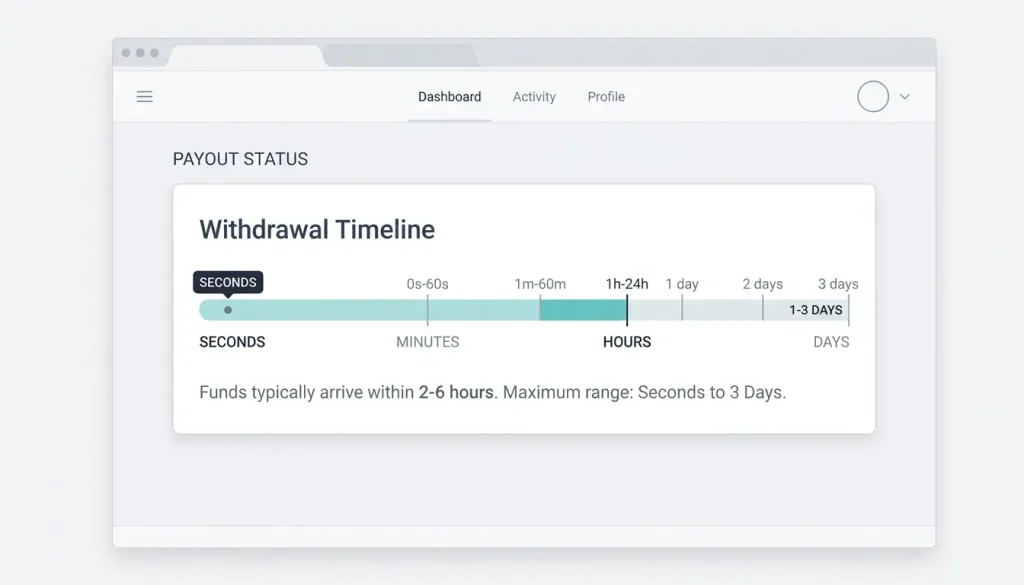
This piece breaks the timeline into its actual stages so you can see exactly where time goes, explains why your first withdrawal is almost always slower than the rest, and gives you a realistic sense of what counts as a reasonable maximum wait before something is genuinely wrong. No vague “it depends” – the dependencies are knowable, and once you can name them, the wait stops feeling like a black box. The bottleneck is rarely the technology, and naming the real cause is half the battle.
The timeline broken into stages
When people tell me their withdrawal is “taking forever,” I ask them which stage it is stuck at, and most cannot answer – because they have been told it is one event when it is really four. Separating them turns a frustrating wait into a diagnosable one.
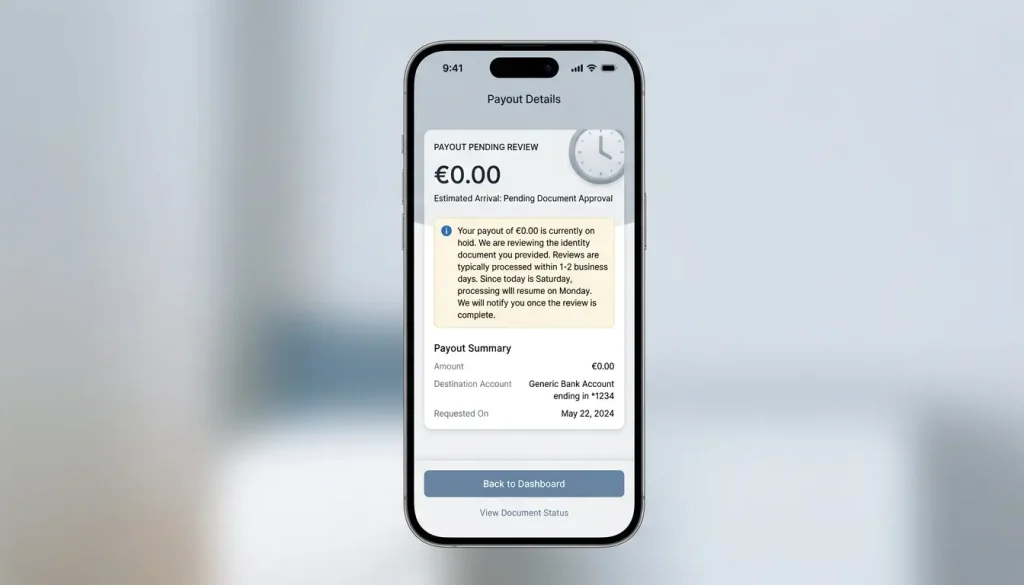
Stage one is the request. You click withdraw and the operator logs it. This is instant and you can see it in your account history immediately. Stage two is the approval or pending period – the operator reviews the request against verification status, risk flags and any bonus terms. This is the longest and most variable stage, ranging from automated seconds to a manual queue measured in hours or days depending entirely on operator policy. Stage three is the release, where the operator instructs the payment. Stage four is settlement on the rail, where the money physically moves to your account.
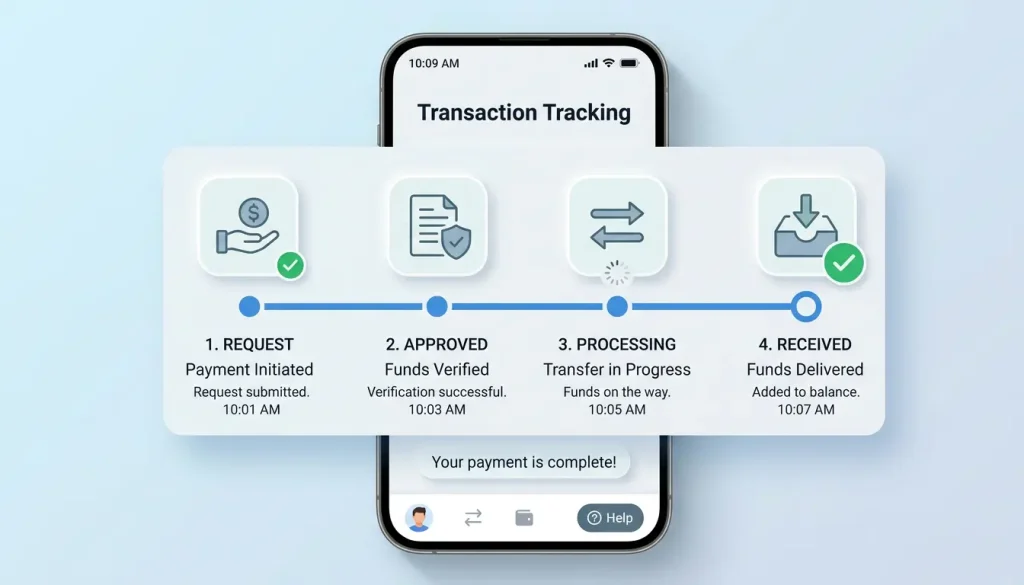
That fourth stage is the one PayID owns, and it is fast by design – the New Payments Platform reaches more than 114 million accounts that can send or receive in real time around the clock, so once funds are released they arrive in seconds rather than waiting for a batch. The takeaway is stark: stages one, three and four together usually account for under a minute of genuine processing. The entire wait you experience is almost always stage two, the operator’s review. So when you are watching a “pending” status, you are watching a person or a policy, not a payment rail straining under load. Knowing that tells you where to push and where patience is pointless.
First withdrawal versus repeat withdrawals
The gap between your first PayID withdrawal and every one after it can be enormous, and almost nobody warns you about it in advance. My first cash-out at a typical operator took the better part of a day; my fifth at the same place took under three minutes. The operator did not get faster – I did.
The reason is that a cluster of one-time hurdles all land on the first withdrawal. Identity verification is usually triggered the first time you try to take money out rather than when you deposit, so your debut cash-out carries a document review that none of the later ones will. The operator is also seeing your withdrawal behaviour for the first time, which can attract a closer look. And any first-time risk checks run once and then largely fall away for an established, verified account.
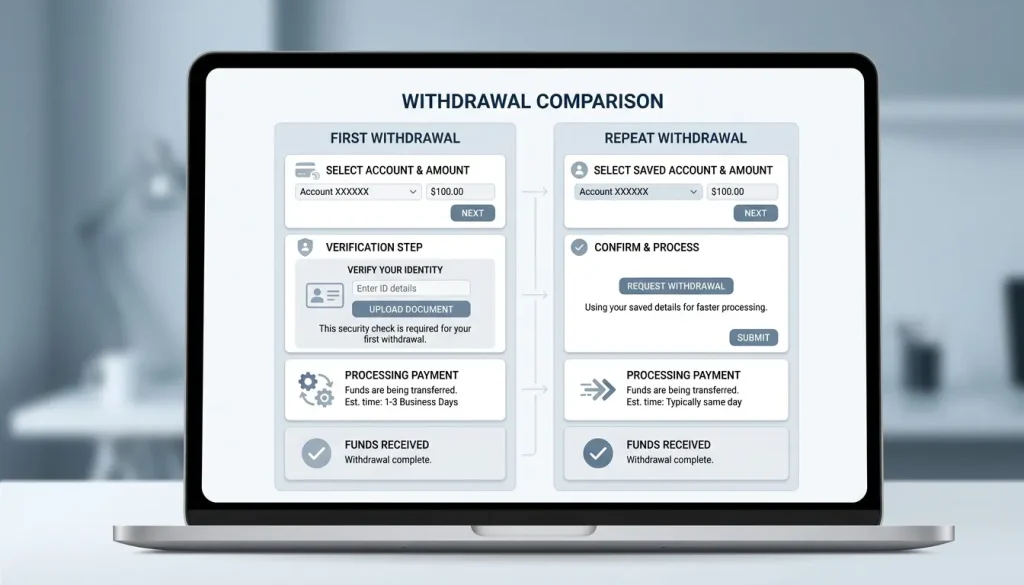
This is worth internalising because the speed PayID is famous for is genuinely real – it is just back-loaded. PayID has become so ordinary that around one in three Australians had already used it for personal transfers by 2023, and at the operator level, repeat withdrawals to a verified account on a supported PayID rail are where that everyday speed actually shows up. The practical move is simple: get verification done early, ideally right after signing up, so the slow stage happens before you ever have winnings waiting on it. Treat the first withdrawal as the one that pays the setup cost, and judge the operator’s true speed by the second one. That is the number that will describe the rest of your experience.
What can stretch the wait
A handful of specific factors stretch a withdrawal beyond its baseline, and the good news is that almost all of them are either avoidable or temporary. Knowing the list means you can usually tell, within a minute of looking, whether your delay is normal or worth chasing.
The first factor is the first-withdrawal verification I have already described – the largest single stretch and a one-time cost. The second is weekend and after-hours timing. If an operator reviews payouts manually during business hours, a request lodged on a Friday night may simply sit until Monday, not because the rail rests but because the reviewer does. Lodging earlier in the day and earlier in the week is the cheapest speed-up available. The third is a verification or compliance hold, where the operator pauses a withdrawal to confirm identity or query a transaction before releasing it.
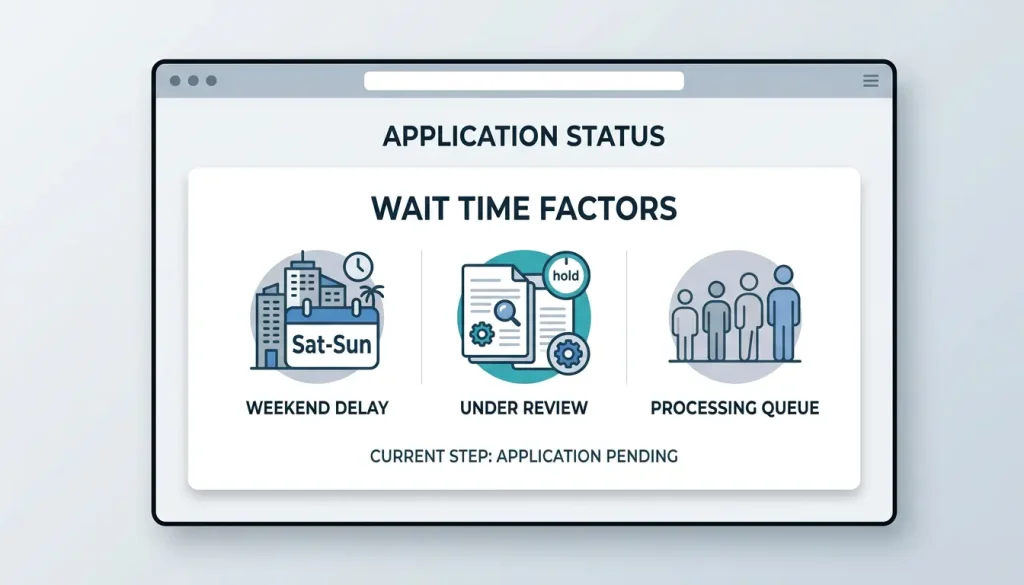
That last point connects to something Lynn Kraus of Australian Payments Plus has argued – that protection should be built into how we pay from the ground up, rather than bolted on after the fact. The same instinct shapes why a careful operator sometimes holds a payout for a check: the friction is the safeguard working, not failing. So when a withdrawal lags, run the checklist. Is it your first? Did you lodge it over a weekend? Has the operator asked you for anything you have not provided? If the answer to all three is no and you are well past a day on a verified, routine payout, that is the point at which a reasonable wait has become an unreasonable one, and a support conversation is justified. For the full picture of how the deposit and withdrawal sides differ in speed, our guide to PayID casino withdrawals covers the process end to end.
Frequently Asked Questions
Why is my first payout slower?
Because identity verification is usually triggered on your first withdrawal rather than at deposit, adding a one-time document review to that single cash-out. Later withdrawals to the same verified account skip that step and tend to run at the rail's real speed of seconds to minutes.
Do payouts process on weekends?
The PayID rail itself runs around the clock, including weekends, so settlement is unaffected. The variable is the operator's approval step - if they review payouts manually during business hours, a weekend request can sit until the next business day even though the rail is ready.
What is a reasonable maximum wait?
For a verified, routine withdrawal that is not your first and was not lodged over a weekend, more than about a day without movement is worth questioning. Beyond that, if the operator has not requested anything from you, it is reasonable to contact support and ask where the payout is held.
Guides
How a PayID Deposit Works at an Online Casino
Making your first PayID deposit The first time I ever funded a casino account with PayID, I expected the same fiddly card form everyone has typed a hundred times -…
Playing Real-Money Pokies With PayID
Playing pokies with PayID Pokies are the reason most Australians end up…
When a PayID Deposit Doesn’t Show Up at the Casino
When a PayID deposit doesn't show up The most stressful five minutes…
Using PayID on Mobile at a Casino
Using PayID on mobile PayID was born on the phone. It lives…
PayID vs a Standard Bank Transfer for Casino Payments
PayID vs a standard bank transfer Plenty of people assume PayID and…