
PayTo and PayID: How They Differ
 Available in US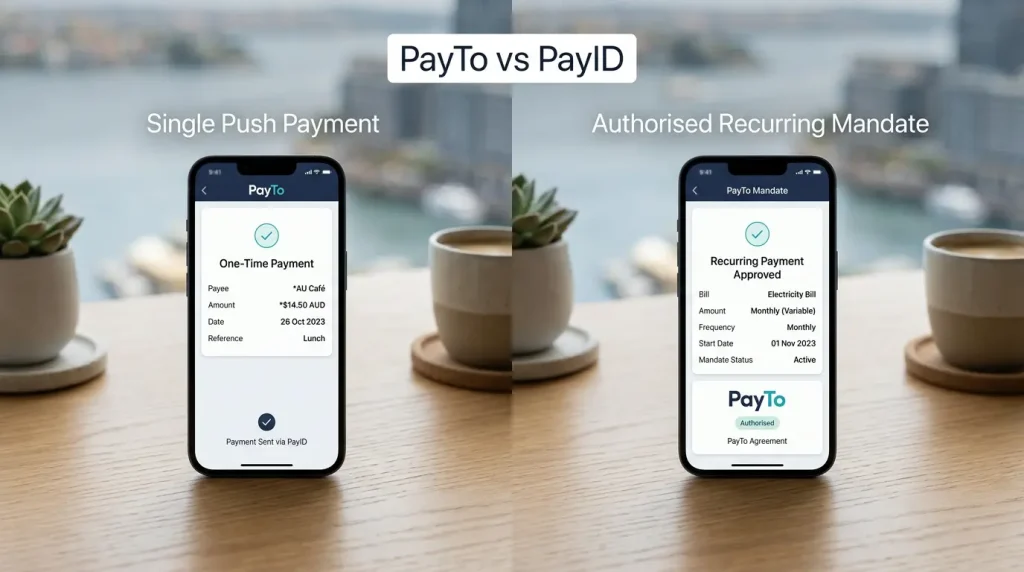
PayTo and PayID: how they differ
If PayID is the present of Australian instant payments, PayTo is widely seen as the next chapter – and the two are often confused because they share infrastructure and a family resemblance. But they solve different problems, and the difference comes down to a single concept: who initiates the payment, and how much standing permission they have.
Table of Contents
PayID is built for push payments. You decide to pay, you open your banking app, and you push money out to an alias. Each payment is a one-off decision you make in the moment. PayTo is built around authorised pulls – you set up an agreement, a mandate, that allows a business to request payments from your account under terms you have approved in advance. Instead of you pushing each time, the business pulls, but only within the boundaries you agreed to.
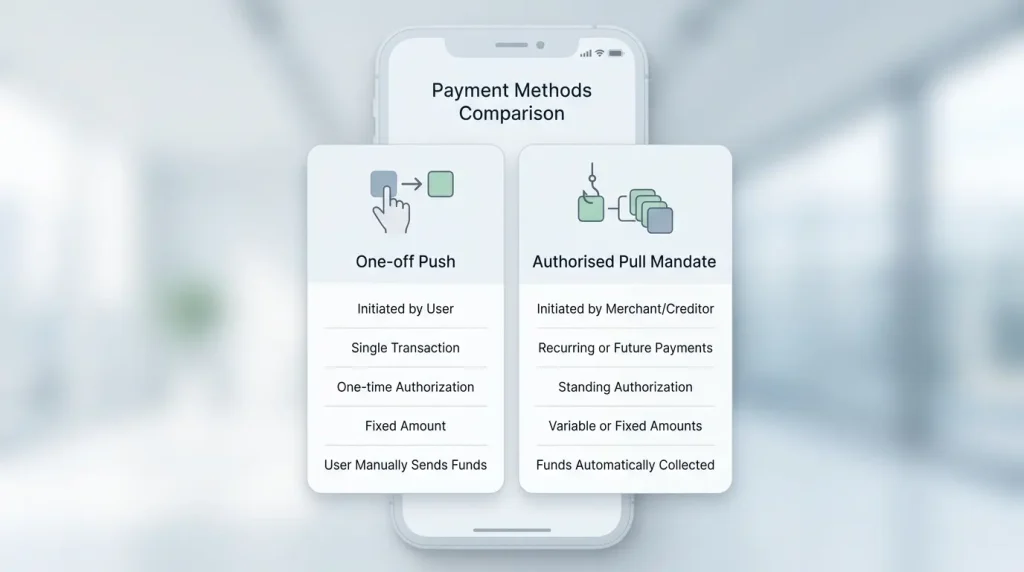
That distinction – a one-off push you control each time versus a standing authorisation a business can draw against – is the whole story, and it has real implications for how money could move in and out of a casino. This piece explains the push-versus-pull model in plain terms, where PayTo might fit casino payments, and what a player should watch for as these authorised-payment arrangements become more common. It is a forward-looking comparison, because PayTo is still rolling into wide use, but the model is worth understanding now precisely because it changes the control dynamic.
Push payments versus authorised pulls
The cleanest way to grasp the difference is to think about who is holding the steering wheel for each transaction, because that is what actually changes between the two models. Everything else follows from that one question.
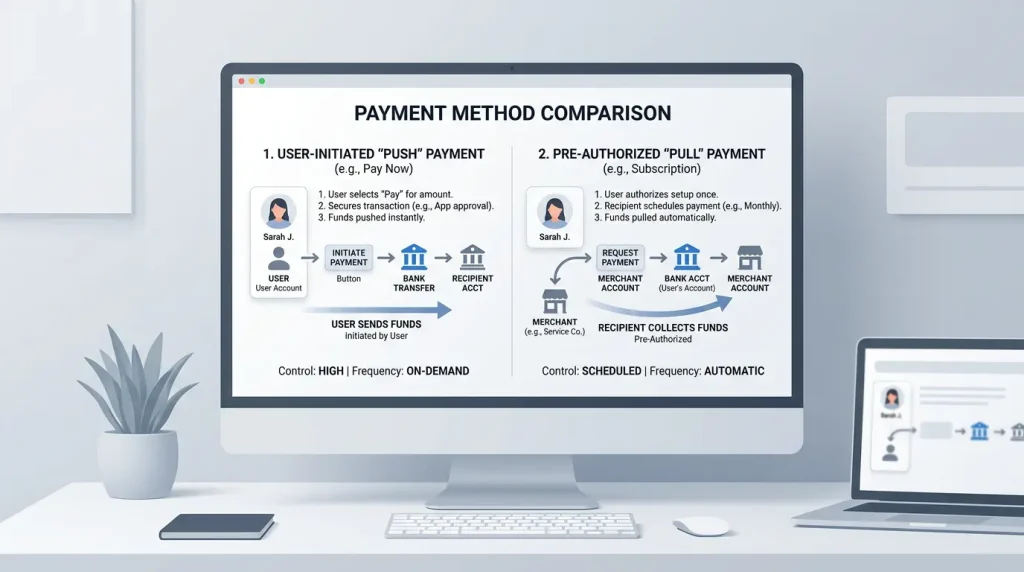
With a push payment, you hold the wheel every single time. PayID is the classic example: nothing moves from your account unless you actively initiate it, authorise it, and confirm it in that moment. A recipient can give you an alias to pay, but they cannot reach into your account – the action is always yours, transaction by transaction. This is the model behind ordinary PayID transfers, and it is why PayID deposits feel so directly under your control.
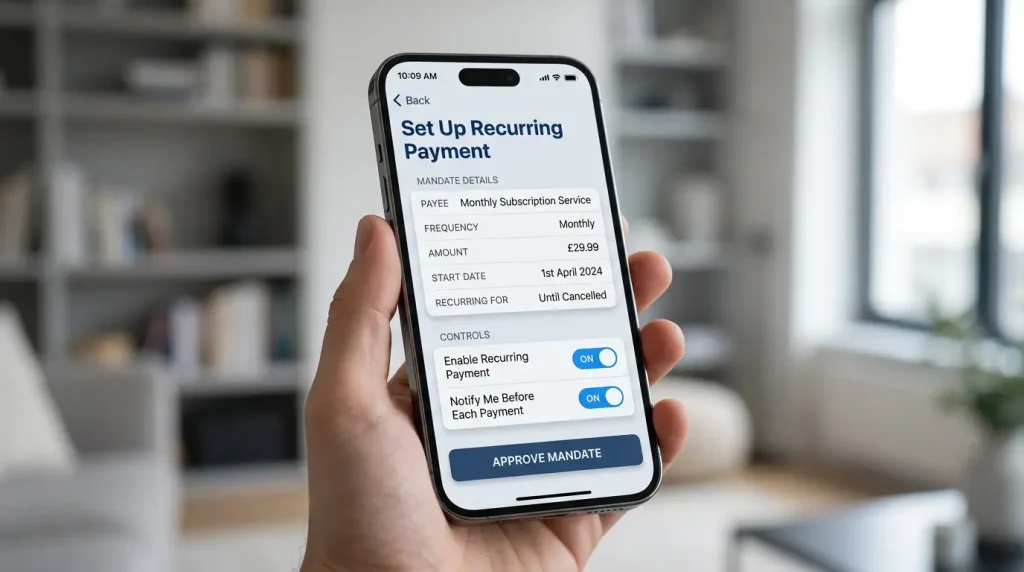
With an authorised pull, you hand over a limited, pre-agreed slice of the wheel. PayTo works by establishing a mandate – a standing agreement between you and a business that spells out terms like how much can be taken, how often, and for what. Once you have approved that mandate, the business can request payments from your account within those limits without you confirming each one individually. Crucially, you approve and can see these mandates in your banking app, and you can pause or cancel them, so it is authorised access rather than open-ended access. The richer data these rails carry – the platform supports payment descriptions of up to 280 characters – helps make mandates clearer about what each payment is for. The key mental shift is from “I send each payment” to “I authorise a pattern of payments and retain the power to revoke it.” That is more convenient for recurring arrangements and more demanding of your attention, because you are granting standing permission rather than acting once.
Where PayTo could fit casino payments
Speculating about where PayTo fits casino payments is genuinely useful, because the pull model has clear potential applications and equally clear reasons for caution. I want to walk both, because the same feature that could be convenient is the one that demands the most care.
On the convenience side, an authorised-pull arrangement could in principle streamline repeat deposits. Rather than pushing a deposit each time you play, a mandate could allow pre-agreed top-ups within limits you set, which sounds frictionless. The infrastructure certainly has the reach to support it – more than 114 million accounts can send or receive on the underlying platform – so there is no technical barrier to casinos eventually offering mandate-based funding.
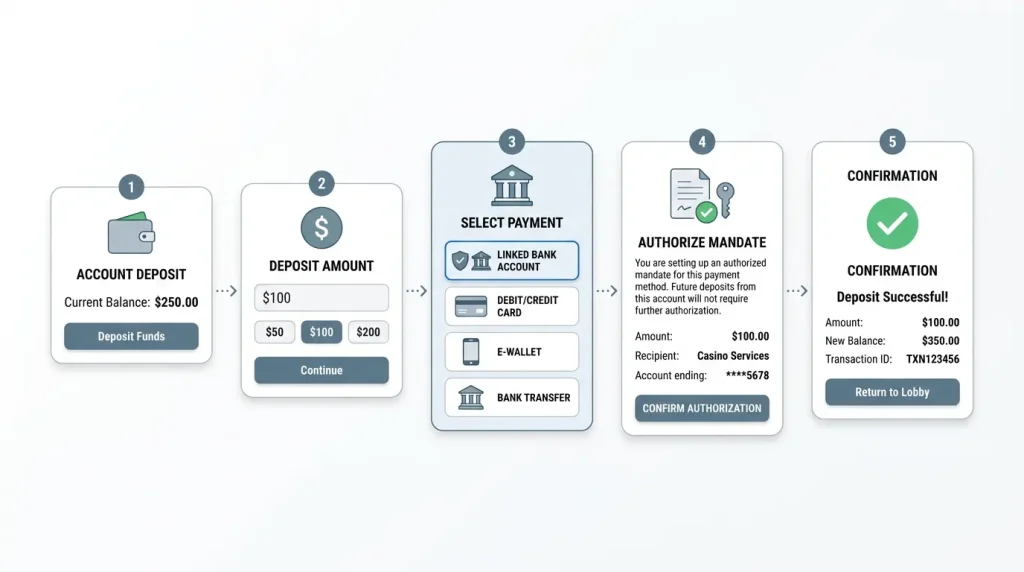
But this is exactly where I would urge the most caution, and where the control dynamic of pull payments matters most. A standing authorisation that lets an operator pull funds is the opposite of the deliberate, in-the-moment friction that helps people keep gambling spending in check. The whole protective value of PayID’s push model, in a gambling context, is that every deposit is a fresh, conscious decision – there is a natural pause each time. A mandate removes that pause by design. So while PayTo could fit casino payments mechanically, the responsible-play implications are significant: handing an operator standing permission to draw from your account is a step I would think very hard about, and revisit often, precisely because it erodes the friction that protects you. The infrastructure that makes all of this possible is worth understanding in its own right, and our guide to NPP and Osko explained covers the rails both PayID and PayTo run on. PayTo is a powerful tool; in a gambling context, its power is exactly what warrants restraint.
What players should watch for
As authorised-payment arrangements spread, a handful of specific things deserve a player’s attention – not because PayTo is dangerous in itself, but because the pull model rewards vigilance in a way the push model does not. Knowing what to watch for lets you keep the convenience without losing the control.
First, watch what any mandate actually authorises before you approve it. A mandate specifies amounts, frequency, and purpose, and you should read those terms the way you would read a direct-debit agreement – because that is essentially what it is. Approving a mandate with loose or open-ended limits is handing over more standing permission than you may intend. Second, know where your mandates live: they appear in your banking app, where you can review, pause, or cancel them, so check that list periodically rather than setting and forgetting.

Third, and most important in a gambling context, weigh the loss of friction honestly. The convenience of not pushing each payment is the same thing as the loss of the natural pause that helps you stay in control. If you would not be comfortable with a casino able to draw from your account on a standing basis, then a mandate-based arrangement is not for you, however convenient it sounds – and the straightforward push model of PayID, where every deposit is a deliberate act, remains the safer default. Finally, remember that you retain the power to revoke. Authorised access is not permanent access; cancelling a mandate is always within your control, and exercising that power the moment an arrangement no longer serves you is part of using these tools well. PayTo expands what is possible; using it wisely means never letting convenience quietly outrank control.
Frequently Asked Questions
Could a casino auto-debit me via PayTo?
In principle a mandate-based arrangement could allow an operator to draw pre-agreed amounts from your account, since that is how authorised pulls work. You would have to approve the mandate first and could pause or cancel it in your banking app, but the standing permission removes the deliberate, in-the-moment friction that push payments like PayID preserve.
Is PayTo replacing direct debit?
PayTo is designed as a modern, more transparent alternative to traditional direct debit, giving you clearer visibility and control over the agreements through your banking app. It uses authorised pulls within terms you approve, which you can review, pause or cancel, rather than the older, less visible direct-debit model.
Is PayTo as instant as PayID?
Both run on the same real-time national infrastructure, so payments made under a PayTo mandate settle on the same fast rails as a PayID transfer. The difference is not speed but control model - PayID is a one-off push you initiate, while PayTo is an authorised pull within a standing agreement.
Guides
NPP and Osko Explained: The Rails Behind PayID
The rails that make PayID instant Most people use PayID for years without ever knowing what makes it instant, and that is fine - you do not need to understand…
What BetStop Is and Who It Helps
What BetStop is and who it helps Sometimes the most useful tool…
PayID vs POLi for Casino Payments
PayID and POLi: two Aussie bank methods For a long time, if…
Protecting Yourself From PayID Scams
Protecting yourself from PayID scams Here is the single most useful thing…
Which Australian Banks Support PayID
Which banks let you use PayID The short answer to "does my…