
Is PayID Safe for Online Casino Play? The Honest Answer
 Available in US
How safe PayID is, and what safety means here
I have lost count of how many times someone has asked me “is PayID safe” and been quietly frustrated by my answer, which is always a question back: safe from what? Because the honest answer splits cleanly into two layers, and almost every misleading article you will read collapses them into one.
Table of Contents
Here is the split that everything in this piece hangs on. The PayID rail itself, built on the New Payments Platform, is genuinely safe by design. You never hand over full bank details, the system checks the recipient’s name before money moves, and transfers carry rich data that makes them traceable. That layer is solid, and I will show you exactly why. But “casino safety” is a completely different question, because the operator on the other end of that perfectly safe payment might be an offshore casino with no Australian licence and no obligation to ever pay you back. Conflating those two layers is the single most dishonest move in this entire niche, and it is the move nearly every competing article makes.
So when a listing tells you “PayID is safe, so this casino is safe,” it is performing a sleight of hand. The safety of the rail tells you nothing about the trustworthiness of the operator, in the same way that posting a letter through a reliable postal service tells you nothing about whether the person you are writing to will ever reply. The envelope is secure. The correspondent is the risk.
What I want to do here is take both layers seriously and separately. I will show you what the PayID rail genuinely protects you from, how the name-check system stops misdirected payments, what the scam landscape actually looks like in dollar figures rather than vague warnings, and then I will be equally honest about the one risk PayID cannot touch, which is the operator itself. By the end you will be able to answer “is PayID safe” with the precision it deserves, which is to say: the payment, yes; the casino, that depends entirely on you.
What the PayID rail protects you from
Start with the good news, because it is real and it is concrete. The PayID rail removes several categories of risk that older payment methods carried, and understanding what it removes is the first half of understanding what it cannot.
The most obvious protection is that you never expose full payment credentials. With a card deposit, you hand the casino a card number, expiry, and security code, a complete set of details that a dishonest or breached operator could misuse or that could leak in a data breach. PayID works the other way around. You initiate the payment from your own banking app to the casino’s PayID, an alias mapped through the addressing service, which is the directory that links a PayID such as a phone number or email to an actual bank account. The casino never receives anything it could reuse to pull money from you. You push; it cannot pull.

The second protection is the absence of chargeback exposure cutting both ways. Account-to-account transfers, where funds move directly between bank accounts rather than across a card network, are not reversible the way card payments are. For you, this means clarity: once a deposit is sent, it is sent, with no surprise reversal weeks later. It also means you cannot weaponise a chargeback against a casino, which sounds like a downside until you realise it removes a whole category of dispute and the account freezes operators impose to defend against it.
The third protection is traceability. Because NPP transfers support data-rich messages, a PayID payment carries a clear description and reference rather than a cryptic code, which matters enormously when something needs investigating. If a deposit goes astray, you and your bank can see exactly where it went and what it was labelled, which turns a potential dispute into a lookup. None of this, though, addresses the question of whether the casino you paid will behave honestly, and that is precisely the boundary of what a payment rail can do. The rail can make your money move safely. It cannot make the recipient honest.
How name-check stops misdirected payments
The feature I get most excited about, and the one competitors barely mention, is the name-check that now sits inside Australian payments, because it attacks the specific way most payment scams actually succeed. Let me explain what it does and why the numbers behind it are genuinely impressive.
Confirmation of Payee, the name-check system that shows you the registered name attached to a PayID before you confirm a payment, addresses a simple but devastating problem. For years, the weak point in any transfer was that you entered the destination details and the money went there, name or no name, so a scammer who tricked you into sending to the wrong PayID succeeded the moment you hit send. Name-check breaks that by surfacing the recipient’s actual registered name before the money moves, giving you a last chance to notice that “QuickPay Refunds Pty Ltd” is not the person you thought you were paying.
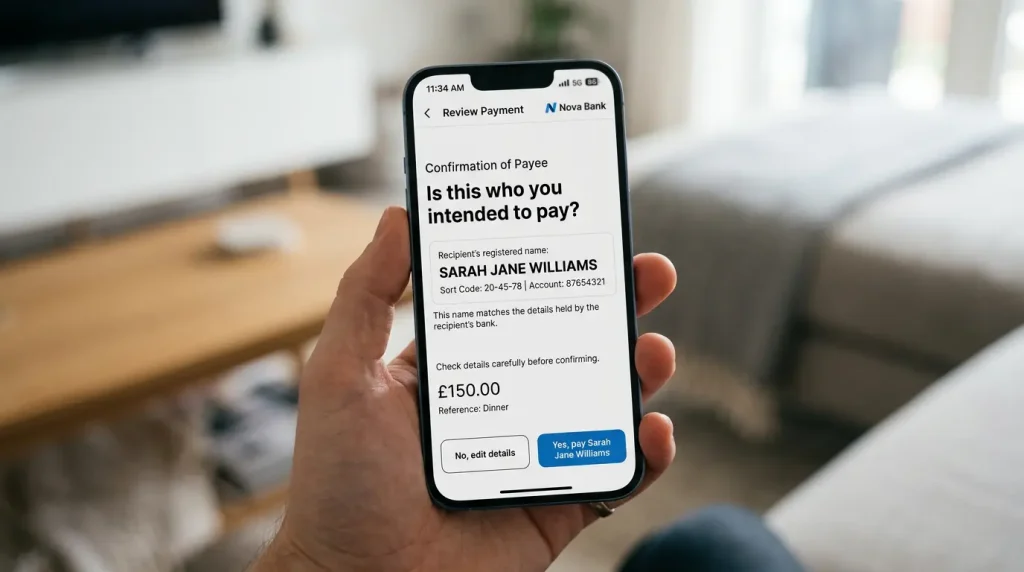
The adoption figures tell you this is not a niche feature. Since its launch in July 2025, Confirmation of Payee was used by Australians more than 100 million times, which is the kind of volume that only comes from the check being built into ordinary, everyday payment flows. And it changes behaviour: research into the system found that one in four users stopped or adjusted a payment after seeing the recipient’s name before sending. That is not a marketing figure. That is a quarter of people catching something wrong at the last possible moment, payment by payment, across the whole banking sector.
The reach is deliberate and nearly complete. The body behind the system targeted near-universal coverage, more than 95 percent of personal accounts, by December 2025, which means the protection is becoming the default rather than an opt-in. One of the senior figures behind the rollout framed the philosophy plainly, arguing that “stopping scams can’t be left to chance or handled after the fact. It needs to be built into how we pay, from the ground up.” That is exactly what name-check does, and it is a meaningful reason the PayID rail is safer today than the bank transfer it replaced. For the deeper mechanics of how a match, a close match, and a no-match are handled, and what each one should make you do, I have written a full breakdown of how Confirmation of Payee works in Australia. The short version for casino deposits is that name-check gives you a moment to verify you are paying the operator you intended, and you should always use it.
The PayID scam landscape in real numbers
Vague warnings about scams help nobody, so let me replace them with figures, because the scale of the problem is the context that makes the protections above worth caring about. The Australian scam picture is large, and it is shifting in instructive ways.
In the first half of 2025, Australians reported more than 108,000 scams and financial losses of around 173.8 million Australian dollars to the national reporting service. That is the live scale of the threat environment in which any online payment now operates. But the longer trend carries a more hopeful signal: total scam losses in 2024 came to 2.03 billion Australian dollars, a fall of 25.9 percent from the previous year, which is the first sustained decline in years and coincides with exactly the kind of payment-level defences, name-check among them, that have been built into the system. Losses are still enormous, but the direction has reversed, and that reversal is not an accident.
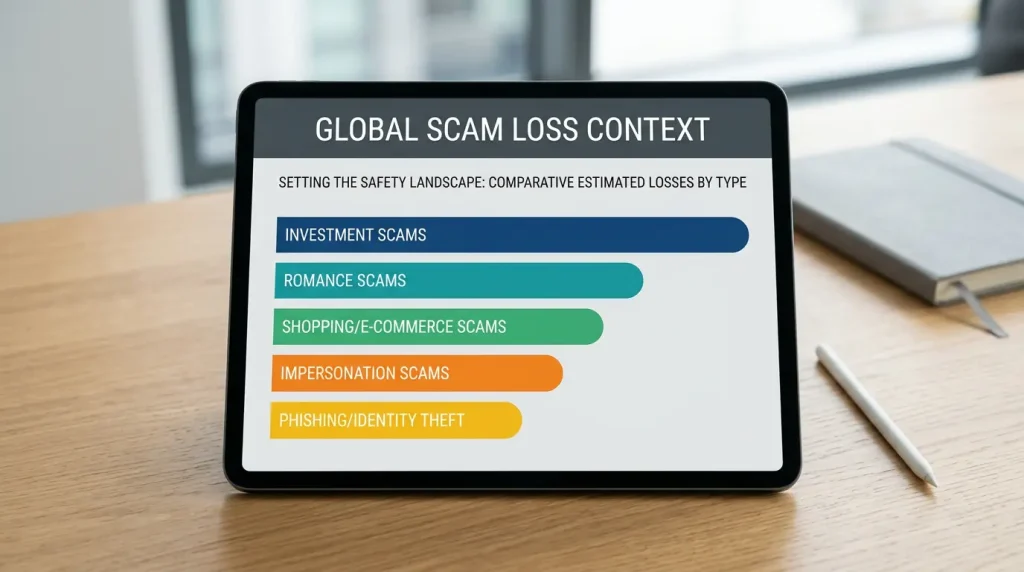
The point of putting these numbers in front of you is not to frighten you off online payments, which would be both futile and beside the point. It is to calibrate where the danger actually sits. The losses are overwhelmingly driven by deception, by people being tricked into authorising payments they should not have, rather than by the payment rail being technically breached. The rail is rarely the failure point. The human at the keyboard, persuaded by a convincing story, is. That is why a name-check that interrupts the human at the moment of payment moves the needle more than any amount of backend encryption.
PayID impersonation scams and how they run
One scam type deserves singling out because it abuses the PayID brand directly, and recognising its shape is genuine protection. PayID impersonation scams trade on the fact that PayID sounds official and most people do not know precisely how it works, which gives a scammer room to invent a plausible-sounding process.
The classic version targets people selling items online. You list something for sale, a “buyer” offers to pay by PayID, and then a message arrives claiming there is a problem: your account is “not eligible” to receive PayID payments, or it needs to be “upgraded” to a business account, and to fix it you must send a payment first that will supposedly be refunded. There is no such mechanism. PayID never requires you to send money in order to receive it, and any request structured that way is a scam by definition. The losses are real; Scamwatch reported that users lost 260,000 Australian dollars to PayID impersonation scams over a single year, a figure that captures only what was reported.

The encouraging counterpoint is how effective name-check is against exactly this category once it is widely deployed. A comparable name-check system in the Netherlands cut impersonation fraud by 81 percent and misdirected payments by 67 percent, which is the kind of reduction that turns a major fraud channel into a marginal one. The mechanism is the same one Australia has now rolled out: show the real recipient name before the money moves, and the impersonation collapses because the scammer’s fake identity cannot survive contact with the actual registered name. Knowing the shape of the scam plus having the name-check at your back is a genuinely strong position to play from.
The risk that PayID can’t solve: the operator itself
Now the hard part, the part the affiliate listings skip, because it is the part that does not sell. PayID can protect your payment perfectly and still leave you exposed, because the largest risk in offshore online casino play is not the payment method at all. It is the operator.
Here is the uncomfortable structural fact. Online casinos serving Australian players are, almost without exception, offshore operators, because the product is not licensed domestically. That means when you deposit, your money has travelled, safely and instantly, to an entity outside Australian jurisdiction that no local regulator supervises and no local authority can compel to pay you. The name-check confirmed you paid the operator you intended. It said nothing about whether that operator will honour a withdrawal, apply fair terms, or still exist next month. The rail delivered your money exactly where you aimed it, and that is the limit of what the rail can promise.

This is why I am so insistent on separating the two safety layers. A player who believes “PayID is safe, therefore my deposit is safe” has confused the security of the journey with the trustworthiness of the destination. The deposit journey is secure. The destination might be an operator that delays payouts, imposes impossible bonus terms, freezes accounts on a pretext, or simply vanishes. No payment technology, however well engineered, reaches across a border to recover money from a casino that decides not to pay. That recovery does not exist for offshore operators, and pretending otherwise is the most harmful thing the dishonest listings do.
The practical consequence is that your safety in online casino play is mostly a function of operator selection, not payment selection. PayID hands you a safe rail; what you send across it, and to whom, is the decision that actually determines whether you get hurt. That places the responsibility squarely on diligence, which is sobering, but it is also empowering, because diligence is something you control entirely.
Practical steps to stay safe with PayID
Let me turn all of this into things you can actually do, organised by which layer they protect. The rail-level habits are quick and the operator-level habits are the ones that genuinely matter, so I am giving you both honestly weighted.
At the payment layer, the habits are simple. Always read the name that name-check surfaces before confirming a deposit, and stop if it does not match what you expect, because that pause is the single most effective scam defence available to you. Never respond to a message claiming you must send money to receive a PayID payment, since no such process exists. Initiate every deposit yourself from your own banking app rather than following a link someone sent you, so you control the destination. And keep your banking app’s own security, the two-factor authentication that requires a second confirmation beyond your password, switched on, because the rail’s safety assumes your account is not already compromised.
At the operator layer, where the real exposure lives, the work is heavier and worth every minute. Verify the casino’s licensing at the source rather than trusting a footer logo, confirm it is not on the regulator’s published block list, and check that it pays out through PayID rather than only accepting it for deposits. Read the withdrawal terms and the account-freeze conditions before you deposit, not after, because those are the terms you will live under on a bad day. Test the operator with a small deposit and a full round-trip withdrawal before you trust it with anything meaningful. None of these steps protects your payment, which PayID already handles; they protect you from the operator, which PayID cannot.
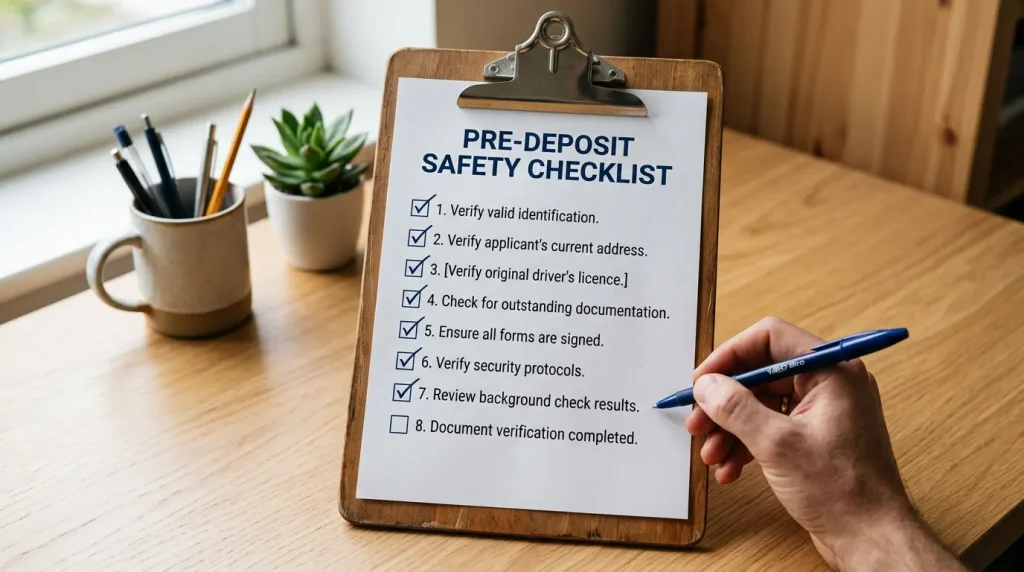
The discipline that ties both layers together is keeping them mentally separate. Treat the payment and the operator as two distinct safety questions every single time, and you will never again fall for the conflation that “safe rail” means “safe casino.” That habit alone puts you ahead of the overwhelming majority of players.
A realistic verdict on PayID safety
So, is PayID safe for online casino play? For the payment itself, genuinely yes, and more so now than ever. You never expose full bank details, name-check gives you a last line of defence that has already changed how a quarter of users behave at the moment of payment, account-to-account transfers are traceable and not silently reversible, and the system is being hardened from the ground up rather than patched after the fact. As a way to move money, PayID is one of the safer options an Australian player has.
But the casino on the other end is a separate verdict, and an honest one has to stay separate. The rail will carry your money safely to an offshore operator that no Australian authority supervises, and from that point your safety depends entirely on whether you chose well. PayID is safe. Whether your casino play is safe is a question PayID was never built to answer, and anyone who tells you otherwise is selling the conflation rather than the truth. Use the safe rail, and put your real diligence where the real risk is, which is the operator.
Online gambling can carry genuine personal and financial harm, and if any of this touches you or someone close to you, support is available and worth reaching for. I can help point you toward the right resources if that would be useful.
Frequently Asked Questions
Can someone steal money from my account using just my PayID?
No. A PayID is an address that lets people send money to you, not a key that lets them take money from you. It maps an alias such as your phone number or email to your bank account through the addressing service, and that mapping only works in the receiving direction. Anyone with your PayID can pay you; nobody can use it to pull funds out. The real PayID-related risk is impersonation, where a scammer tricks you into sending money to them, which is a deception of you rather than a theft from your account.
What is Confirmation of Payee and does it apply to casino deposits?
Confirmation of Payee is the name-check that shows you the registered name attached to a PayID before you confirm a payment, so you can catch a misdirected or scam transfer at the last moment. It applies to the payment you make from your banking app, which includes a casino deposit you send to an operator's PayID. When you deposit, use the moment the name appears to confirm you are paying the operator you intended. It protects the destination of your payment, though it cannot tell you whether the operator itself is trustworthy once your money arrives.
How do I spot a fake PayID payment request?
The defining giveaway is any message claiming you must send money in order to receive a PayID payment, or that your account needs upgrading or unlocking before it can accept one. No such process exists, so a request shaped that way is a scam every time. These schemes most often target online sellers, with a fake buyer inventing an account problem that only a payment from you can fix. Initiate payments yourself from your own banking app rather than following links, and read the name-check before confirming, and these requests fall apart.
Does PayID protect me if the casino refuses to pay?
No, and this is the most important limit to understand. PayID protects the payment, ensuring your money moves safely and to the address you intended, but it has no power over what the recipient does once the funds arrive. Online casinos serving Australian players are almost always offshore, outside any local regulator's reach, so if such an operator refuses to honour a withdrawal there is no payment mechanism that recovers your money. Protection against a non-paying casino comes only from vetting the operator before you deposit, never from the payment rail.
Payments
Casino Sites That Accept Credit Cards in Australia
Understand card deposits, payment checks, costs, withdrawals and alternative payment routes available to Australian players. Where Credit Card Casino Deposits Fit in the Australian Payment Landscape For Australian players, a…
Fast Withdrawal Casino Australia: Payment Methods
Compare payment routes and the account checks, approval stages and conditions that…
Pokies Parlour Casino Australia: Venue Guide
Understand venue formats, machine play, promotions, player controls and the legal limits…
Casinos That Accept PayPal in Australia
Understand payment conditions, verification, withdrawals and alternatives in the offshore online casino…
Plinko Casino Australia: Games, Rules and Risks
Compare slot-style Plinko games with casino formats, real-money conditions, fairness systems, and…