
The Minimum Deposit at a PayID Casino, Explained
 Available in US
The lowest you can deposit with PayID
The smallest PayID deposit I have personally made at an Australian-facing operator was A$10, and it bought me exactly what I wanted – a real session, real money on the table, and an excuse to stop second-guessing whether the cashier worked the way it claimed. That figure is not unusual. Across the operators I have tested over the years, the floor for a PayID deposit almost always lands in the A$10 to A$20 band.
Table of Contents
It is worth being precise about what “minimum” means here, because the word gets muddled with “free.” A minimum deposit is still your money leaving your account – you are funding a balance, just a small one. That is completely different from a no deposit offer, where the operator fronts a small promotional credit and you put in nothing. With a minimum deposit you are in control of every dollar from the start, which is exactly why I steer cautious players toward it.
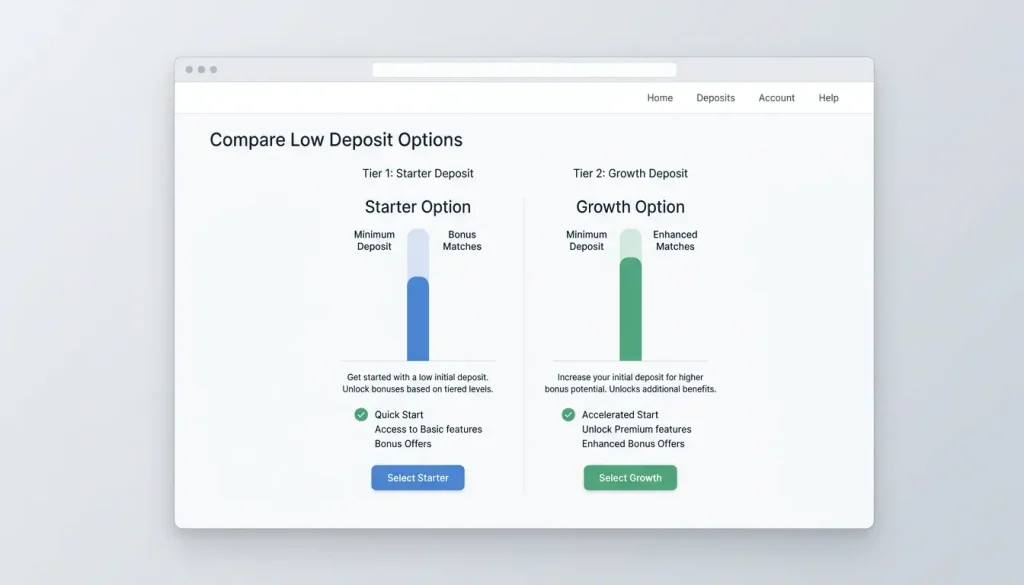
The reason a low floor matters is context. Australians wagered a record AUD 244.3 billion on legal forms of gambling in the 2022-23 financial year, and inside numbers that large it is easy to lose your sense of scale. A A$10 deposit is a deliberate counterweight – it lets you experience an operator’s whole cycle, deposit through play through withdrawal, without committing money you would actually miss. This piece covers the typical thresholds, why they vary, and how to make a small deposit go further without falling for the traps that small balances invite.
Typical A$10 and A$20 thresholds
If you line up a dozen PayID-friendly operators side by side, a pattern emerges fast: the headline minimum clusters tightly. A$10 is the common entry point, A$20 is the next most frequent, and anything higher than A$30 as a hard floor is rare enough that it is worth questioning why.
The reason the band is so consistent comes down to economics on both sides. For the operator, processing a PayID transfer costs almost nothing – wholesale transaction costs on the underlying rail fell from around A$0.39 in 2019 to roughly A$0.04 by the 2025 financial year, so accepting a A$10 deposit is not eating into margins the way a card fee once might have. That cheapness is precisely what lets operators set the floor low; there is no minimum that the payment method forces on them.
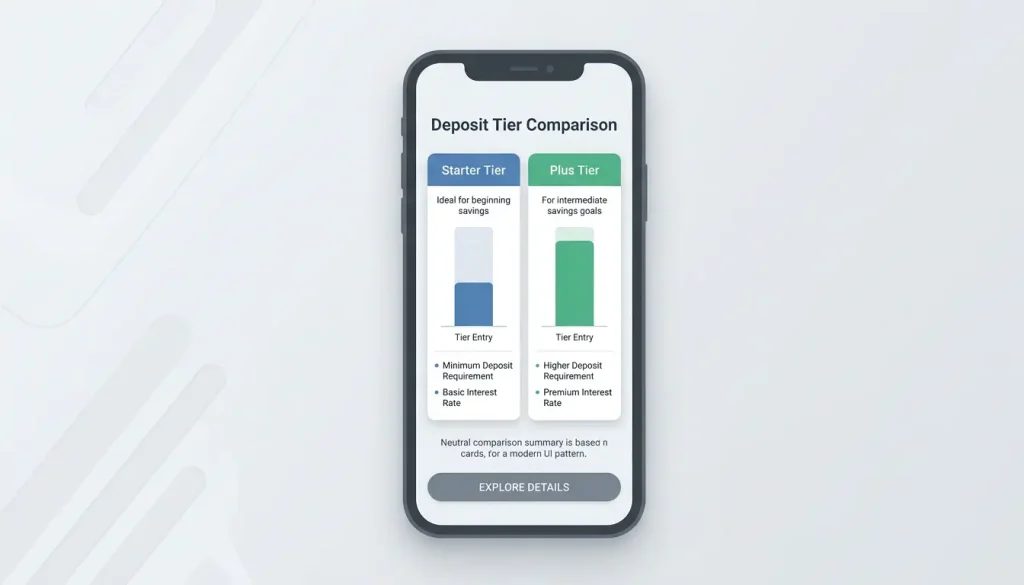
What you will notice is that the minimum sometimes shifts depending on the method. The same casino might accept A$10 via PayID but require A$30 via another channel, simply because the cheaper rail makes small amounts viable. So if you are deliberately starting small, PayID is frequently the method that unlocks the lowest entry – not a coincidence, but a direct consequence of how little the transfer costs to run. When you see a A$10 floor advertised, it is almost certainly a PayID or instant-bank floor rather than a card one.
Why minimums differ by operator
I once compared two operators that, on paper, looked identical – same game library, same broad terms – yet one let me in at A$10 and the other insisted on A$25. The difference was not random, and understanding it tells you something useful about the operator before you have deposited a cent.
Minimums are a business decision, and they encode an operator’s intentions. A genuinely low floor signals confidence that they can make money from engaged players over time rather than from a single large first deposit. A high floor can mean a few things: a focus on higher-stakes players, a desire to cover their own administrative overhead per account, or sometimes a way to filter out bonus-only traffic that deposits the minimum, clears a promotion, and leaves.
There is also a verification angle. Operators have to manage anti-money-laundering obligations, and very small deposits attract less scrutiny than large ones, which can make a low floor administratively simpler. A player who eases in with A$10 looks very different, from a risk perspective, to one who arrives and immediately moves a four-figure sum, and operators design their thresholds with that distinction in mind.
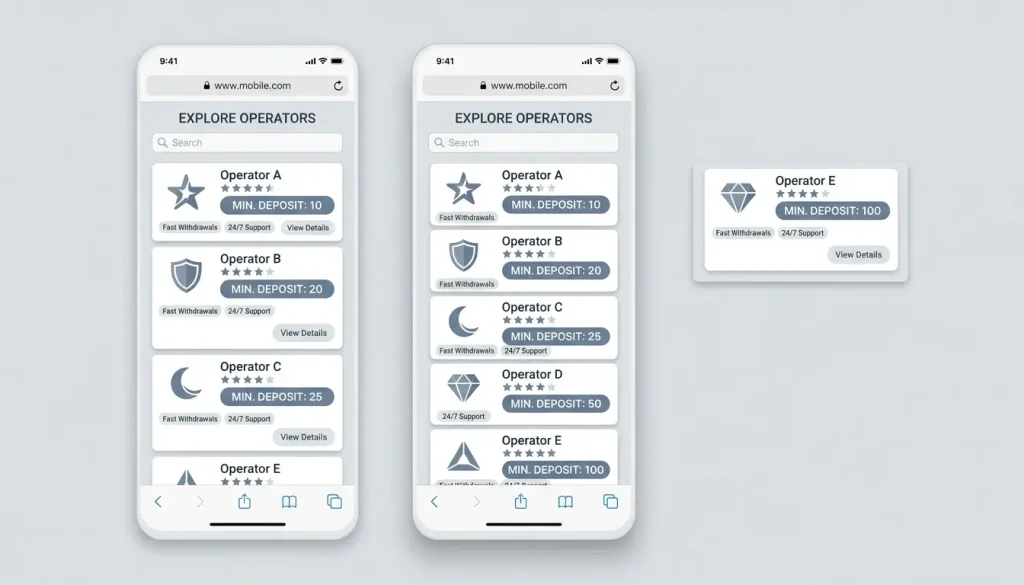
The other variable is the promotional structure layered on top. An operator running an aggressive matched-deposit offer often sets the bonus-qualifying minimum higher than the bare deposit floor, which is how you end up able to deposit A$10 for play but needing A$20 or A$30 to trigger the promotion. That is a deliberate piece of design, not a contradiction – the low floor keeps the door open, while the higher bonus threshold steers players toward the deposit size the operator actually wants. Reading the two numbers separately saves a lot of confusion at the cashier.

None of this is visible on the cashier page – you just see a number. But once you know the number is a choice, you can read it as a small piece of signal: a sensible A$10 to A$20 floor is normal and fine, while an unusually high or oddly specific minimum is worth a second look before you commit. The floor is rarely the whole story, but it is a free clue, and free clues are worth reading.
Playing sensibly on a small deposit
Here is the uncomfortable truth I always front-load: a small deposit is only protective if you treat it as the ceiling, not the floor. The whole point of depositing A$10 is undone the moment you top up “just once more” three times in an evening. Australia already carries the unwanted title of world leader in gambling losses per adult, with average losses landing somewhere around A$1,200 to A$1,555 per adult – and those numbers are built from exactly the small, repeated top-ups that feel harmless in the moment.
So the strategy is mostly behavioural, not tactical. Decide your number before you deposit, send that amount once, and let the session be the session. PayID actually helps you here in a way cards never did: every transfer shows up in your banking app as a clean, timestamped line, so your real spend is impossible to hide from yourself. I tell people to scroll their transaction history at the end of a week – it is the most honest scoreboard there is.

On the play itself, a small balance pairs best with lower-stakes, lower-volatility choices that stretch your session rather than blowing it on two spins. The maths of the house edge does not care how much you deposited, but a smaller balance simply gives variance fewer chances to empty you out quickly. And if you ever notice the deposit amount creeping up week on week, that is the signal to step back and look at the tools designed for exactly that moment, which I cover in the guide to responsible gambling with PayID. A small deposit is a good habit; keeping it small is the whole habit.
Frequently Asked Questions
Is A$10 enough to claim a bonus?
Sometimes, but not always. Many deposit bonuses set their own qualifying minimum that can sit above A$10, so a A$10 deposit might fund play without triggering the offer. Always check the promotion's minimum qualifying deposit, which is separate from the casino's general deposit floor.
Do low minimums mean higher fees?
No. The PayID rail itself is usually free to you regardless of amount, and the wholesale cost to process a transfer is only a few cents, so a small deposit does not carry a proportionally higher charge. Any fee you encounter would be an operator policy, not a function of the deposit size.
Can I withdraw after a A$10 deposit?
Yes, assuming you have winnings and have met any wagering terms attached to bonuses you claimed. The deposit size does not block a withdrawal, though you will still need to complete identity verification before the operator releases funds.
Guides
PayTo and PayID: How They Differ
PayTo and PayID: how they differ If PayID is the present of Australian instant payments, PayTo is widely seen as the next chapter - and the two are often confused…
Playing Real-Money Pokies With PayID
Playing pokies with PayID Pokies are the reason most Australians end up…
Are Gambling Winnings Taxed in Australia?
Are gambling winnings taxed in Australia? This is one of the few…
What PayID Actually Costs You at a Casino
What PayID actually costs you The good news is short and worth…
How a PayID Deposit Works at an Online Casino
Making your first PayID deposit The first time I ever funded a…