
Why Money Laundering Shapes Casino Rules
 Available in US
Why money laundering shapes casino rules
Every time a casino asks where your money came from, you are bumping into a problem far larger than your account: gambling is one of the classic channels for cleaning illicit money, and the rules you experience as friction were built to disrupt it. Understanding that connection turns the verification and the questions from an annoyance into something that makes sense.
Table of Contents
Money laundering, in plain terms, is the process of taking money from crime and running it through legitimate-looking activity so it emerges looking clean. Gambling is attractive for this because large sums move through it constantly, wins and losses are hard to predict, and a payout can be presented as gambling winnings rather than criminal proceeds. That is precisely why the rules around knowing customers and tracing funds exist – they are anti-laundering measures, not arbitrary box-ticking.
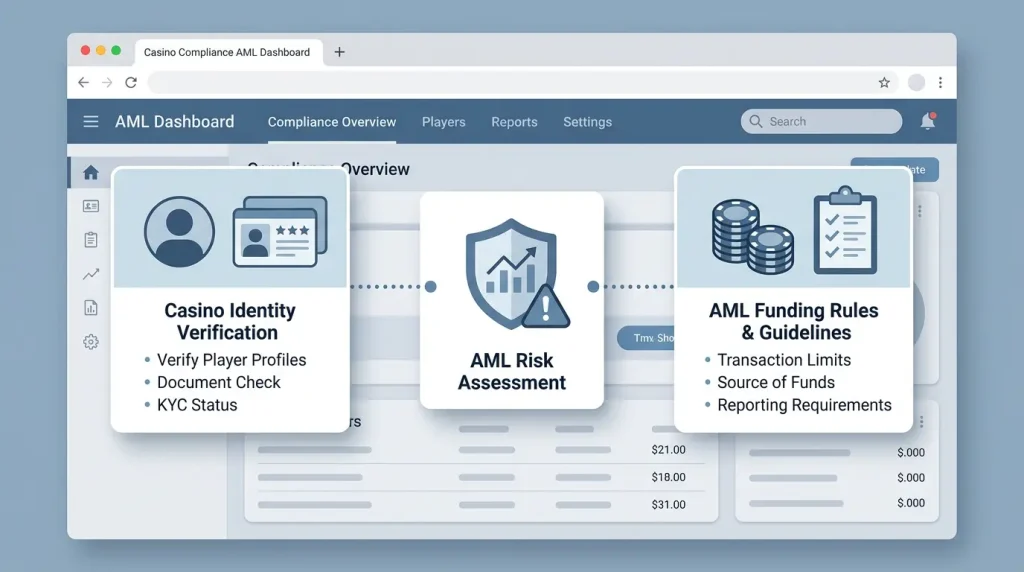
This matters directly to you because it explains the entire architecture of identity checks, source-of-funds questions, and payment monitoring that you encounter as a player, including with PayID. This piece lays out the scale of the laundering problem in Australia, how the financial-intelligence regulator enforces the rules, and what all of it means for your PayID payments specifically. It is a serious topic told straight, without sensationalism – the point is to show you why the system behaves the way it does, so its demands stop feeling personal and start making sense.
The scale of the problem
The reason regulators treat gambling-related laundering so seriously becomes obvious once you see the numbers, which are large enough to reframe the whole conversation. This is not a fringe concern; it is a major front in financial crime.
Start with the overall scale. Brendan Thomas of AUSTRAC has stated that serious and organised crime costs Australia more than A$68 billion a year – a figure that captures the size of the underground economy whose proceeds need laundering somewhere. That money does not stay in the shadows on its own; it has to be moved into the legitimate system, and gambling is one of the routes. The connection is not theoretical: Thomas has also observed that some industries, like the gambling industry, are frequently at the coalface of criminal infiltration.
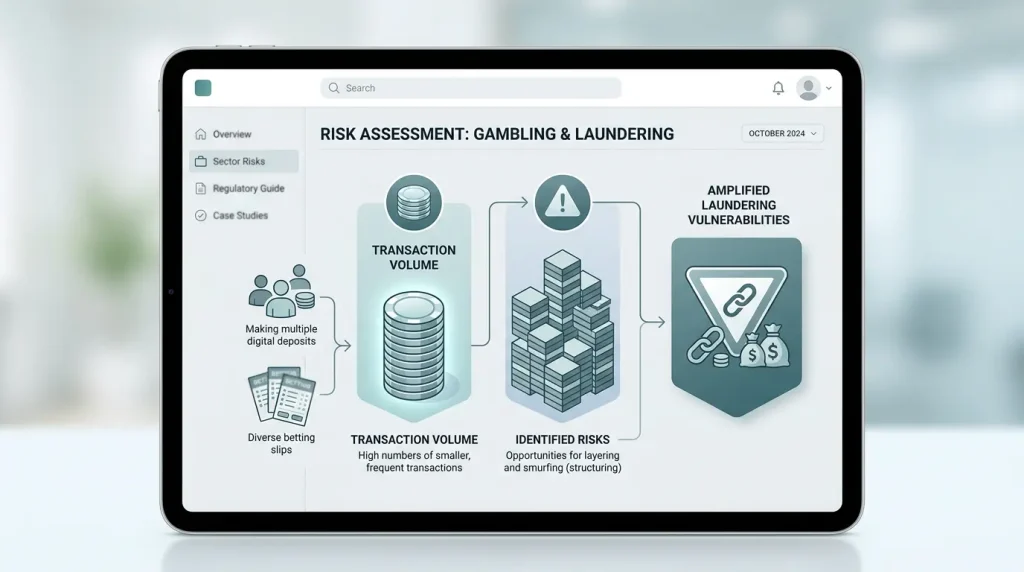
The gambling-specific evidence is stark. An official inquiry concluded that a significant share of the roughly A$95 billion lost in New South Wales poker machines in a single year was likely “dirty money” – criminal proceeds run through machines to obscure their origin. Set against that, the illicit markets generating the money to be laundered are vast in their own right; Australia’s domestic illegal drug trade alone is estimated at a minimum of A$12.4 to A$12.6 billion a year. Put these together and the picture is clear: enormous criminal earnings, a recognised appetite to push them through gambling, and a sector that has historically offered the opacity to do it. That is the problem the rules are built to attack, and the scale of it is exactly why the controls reaching down to your individual account are as firm as they are. The friction you feel is the downstream end of a very large machine.

How AUSTRAC enforces AML rules
Knowing there is a problem is one thing; seeing it actively policed is what makes the rules credible rather than decorative. Australia’s financial-intelligence regulator, AUSTRAC, is the body that enforces anti-money-laundering and counter-terrorism-financing obligations, and its enforcement has real teeth.
The framework works by designating businesses that handle money – including gambling operators – as reporting entities with legal obligations. They must verify customer identities, monitor transactions, and report suspicious activity and large transfers. The intelligence this generates feeds a national effort to spot and disrupt laundering. And when an operator fails to meet these obligations, the regulator acts. In July 2025, AUSTRAC initiated civil proceedings in the Federal Court against a major clubs group operating around 1,400 poker machines across eight venues, over alleged systemic anti-money-laundering and counter-terrorism-financing failures – a concrete demonstration that the rules are enforced against significant players, not just written down.
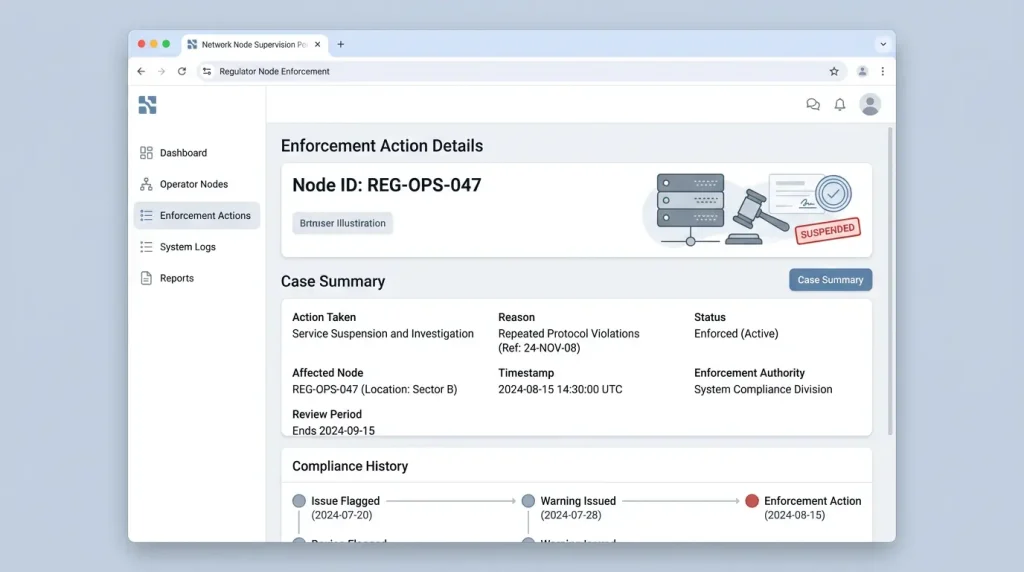
That enforcement reflects a deliberate shift in posture. The regulator has signalled a move toward focusing on substantive risks and harms rather than mere box-ticking compliance, and toward assessing risk at the industry and sector level rather than only chasing individual entities. The practical effect is a regulator that expects operators to genuinely understand and manage their laundering risk, not just file paperwork. For you as a player, this is the layer that explains why a legitimate operator takes verification seriously: the cost of getting it wrong is court action and penalties, so a serious operator builds real checks rather than cosmetic ones. The verification you go through is the player-facing edge of obligations that the regulator is actively willing to enforce in court. The detail of what that verification asks of you is covered in our guide to PayID casino KYC verification.
What this means for your PayID payments
All of this regulatory machinery eventually reaches down to the individual transaction, so the fair question is what it actually means when you, a legitimate player, move money with PayID. The answer is mostly reassuring, with a few practical implications worth understanding.
The first implication is that PayID is, if anything, the opposite of a laundering risk for you – it is a transparency feature. A PayID payment is account-linked, identity-tied, and fully traceable, which is exactly what anti-laundering systems want to see. Far from helping anyone hide money, PayID leaves a clean trail, which is why it sits comfortably within the regulated environment the rules are trying to protect. As a legitimate player, the traceability that some mistakenly wish away is actually working in your favour, demonstrating plainly that your money is ordinary and accounted for.
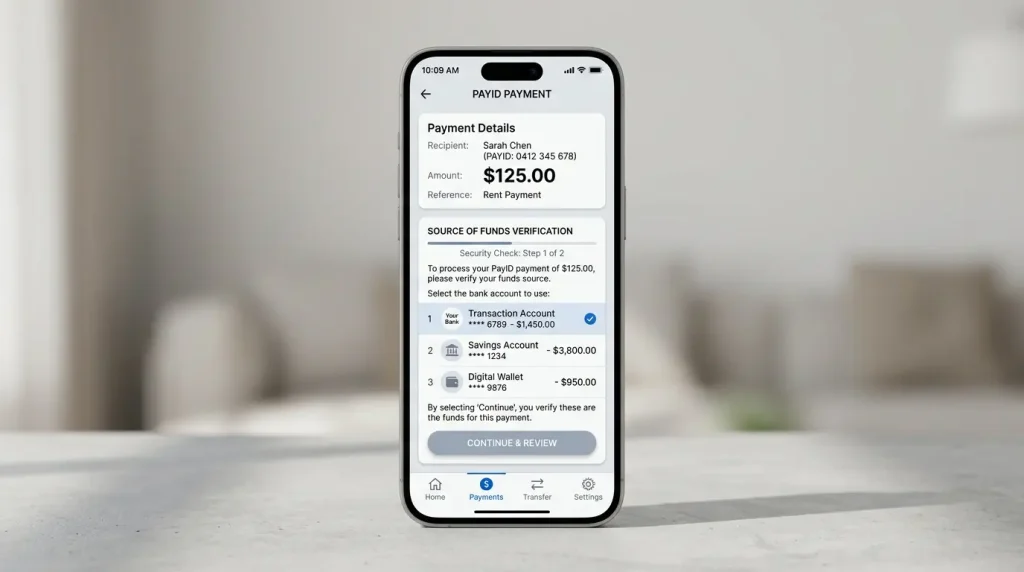
The second implication is the practical one: expect the checks, and do not take them personally. An operator may verify your identity, ask about the source of funds for larger amounts, monitor for unusual patterns, and occasionally pause a transaction for review – all of which are the anti-laundering framework working as designed. None of it implies suspicion of you specifically; it is the system applying uniformly. The third implication is a quiet endorsement of choosing a serious operator. A casino that takes these obligations seriously is one less likely to be caught up in the kind of enforcement action described above, which makes it a safer place to keep your money. So the laundering rules, viewed correctly, are not just hoops – they are a signal. An operator that verifies you properly is one that takes its legal duties seriously, and that seriousness is something you want in a place you trust with your funds. Your traceable PayID payment is not the problem the rules are built to catch; it is the clean baseline they are built to protect.
Frequently Asked Questions
Can a casino freeze a PayID payout over AML?
An operator can pause or hold a payout to complete identity or source-of-funds checks required under anti-money-laundering rules, particularly for larger amounts or unusual patterns. This is the framework working as designed rather than an accusation against you, and providing the requested information typically resolves it.
Why ask where my money came from?
Source-of-funds questions are a core anti-money-laundering measure, since the rules exist to keep criminal proceeds from being cleaned through gambling. For a legitimate player the request is routine and resolved by showing where the money originated, such as a payslip or bank statement.
Is PayID itself a laundering risk?
No, the opposite. PayID is account-linked, identity-tied and fully traceable, which is exactly what anti-laundering systems want to see, so it leaves a clean trail rather than helping anyone hide money. For a legitimate player, that traceability works in your favour by showing your funds are ordinary and accounted for.
Guides
A Pre-Play Checklist for PayID Casinos
A pre-play checklist for PayID casinos After nine years in this field, I have learned that almost every bad experience a player has with an offshore operator could have been…
Which Australian Banks Support PayID
Which banks let you use PayID The short answer to "does my…
Protecting Yourself From PayID Scams
Protecting yourself from PayID scams Here is the single most useful thing…
The Credit Card and Crypto Ban for Gambling in Australia
The ban on credit cards and crypto for betting On 11 June…
Are Gambling Winnings Taxed in Australia?
Are gambling winnings taxed in Australia? This is one of the few…