
Why PayID Casinos Ask You to Verify Your Identity
 Available in US
Why PayID casinos ask you to verify
The first time a casino asks you to upload your ID, it can feel like an accusation – as if you have done something to warrant suspicion. You have not. Identity verification, the process the industry calls KYC, is a standard legal requirement that applies to everyone, and understanding why it exists turns it from an irritation into a formality.
Table of Contents
KYC stands for “know your customer,” and it is the set of checks an operator runs to confirm you are who you say you are. It exists because businesses handling real money are obligated, under anti-money-laundering and counter-terrorism-financing rules, to verify their customers’ identities. This is not a casino being difficult; it is a casino meeting a baseline that applies across the financial world, from banks to brokers to betting.
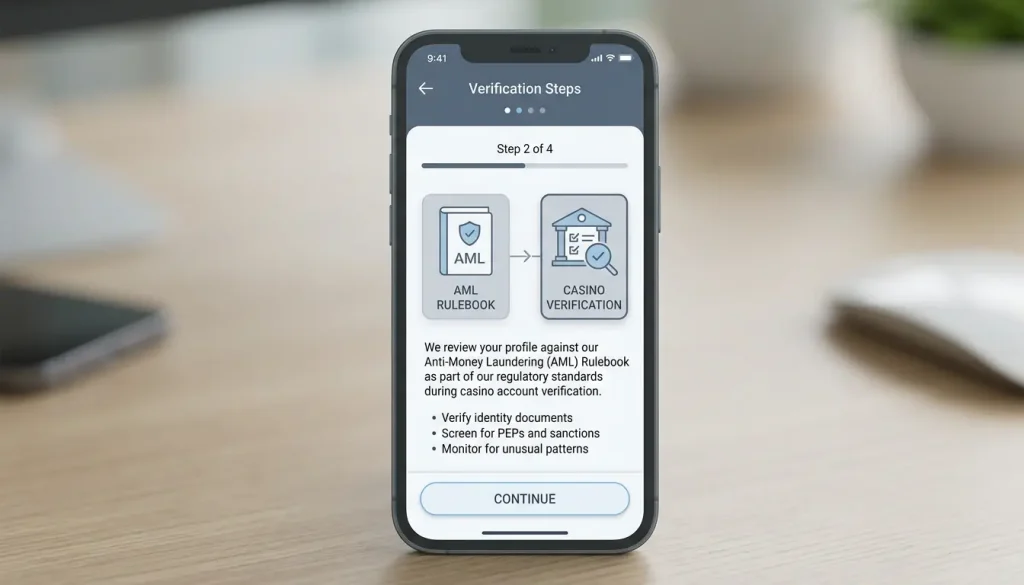
A common misconception is that paying with PayID somehow exempts you from this – that because PayID is tied to your verified bank account, the casino already knows who you are and need not ask. It does not work that way. PayID confirms the payment came from your account, but the operator still has its own independent obligation to verify you directly. The two are separate checks serving the same goal. And crucially, KYC is most often triggered not when you deposit but when you first try to withdraw – which is exactly when people are least patient. This piece explains what operators ask for, when the check fires, and how to clear it without your payout getting stuck behind it.
Documents and details they request
The documents a casino asks for are predictable once you know the categories, and having them ready turns a multi-day back-and-forth into a single clean submission. There are essentially three things an operator wants to establish: who you are, where you live, and where your money comes from.
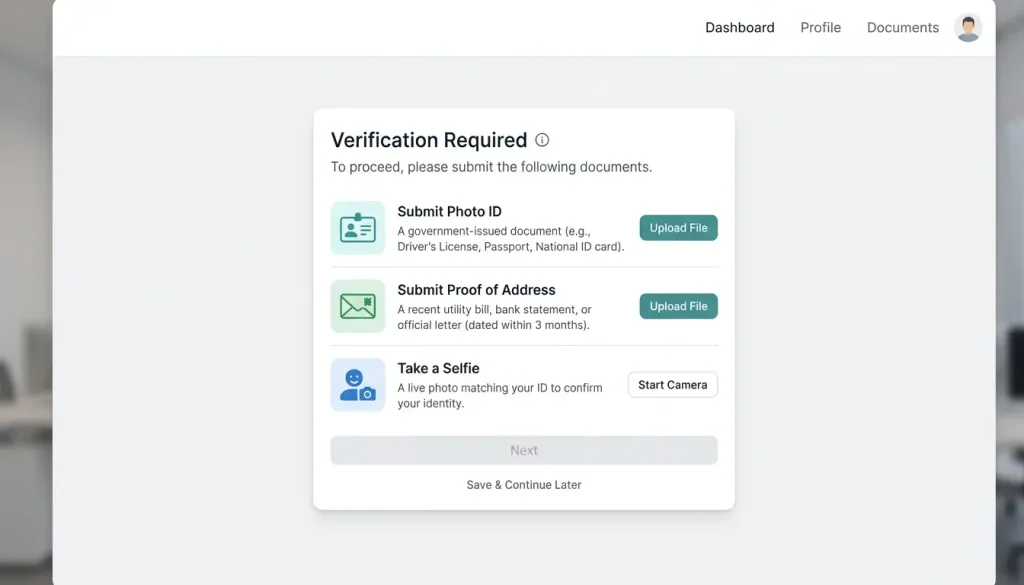
For identity, expect to provide a government-issued photo ID – typically a passport or driver licence – clearly showing your name, date of birth, and the document’s expiry. For proof of address, operators commonly request a recent utility bill, bank statement, or government letter showing your name and residential address, usually dated within the last few months. These two together establish your identity and residence, and they cover the majority of standard verifications.
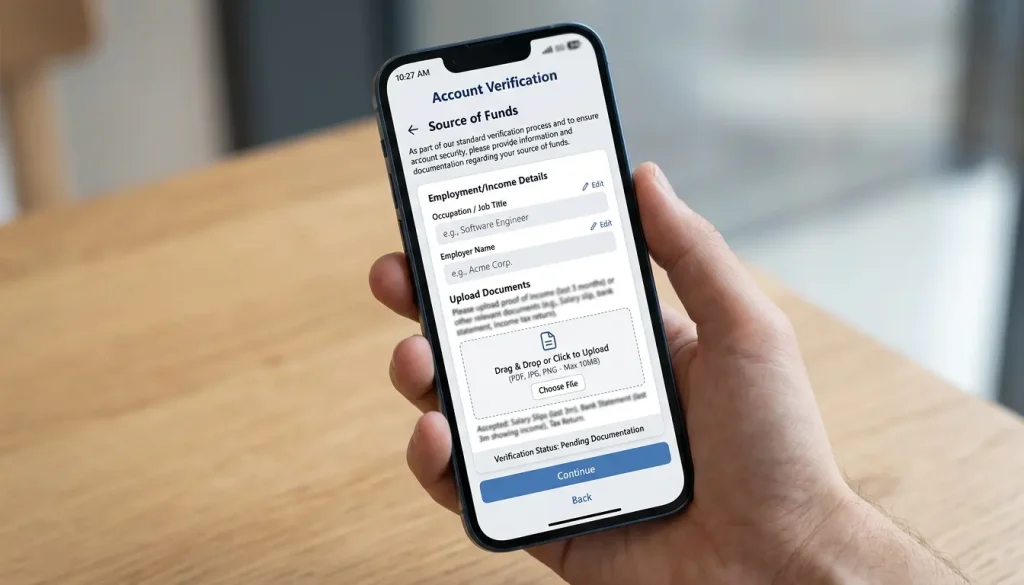
The third category, source of funds, does not always come up but should not surprise you when it does. For larger balances or movements, an operator may ask you to demonstrate where the money you are gambling with originated – a payslip, a bank statement, or a similar record. This is the part players find most intrusive, but it is also the most directly tied to the anti-money-laundering purpose behind the whole process. The reason it exists is sobering: gambling sits adjacent to enormous illicit markets, with Australia’s domestic illegal drug trade alone estimated at a minimum of A$12.4 to A$12.6 billion a year, and source-of-funds checks are part of how the system tries to keep that money out. Have clear, legible copies of these documents ready before you ever request a withdrawal, and the verification becomes a brief upload rather than a drawn-out exchange of “please resubmit, the image is blurry.”
When verification is triggered
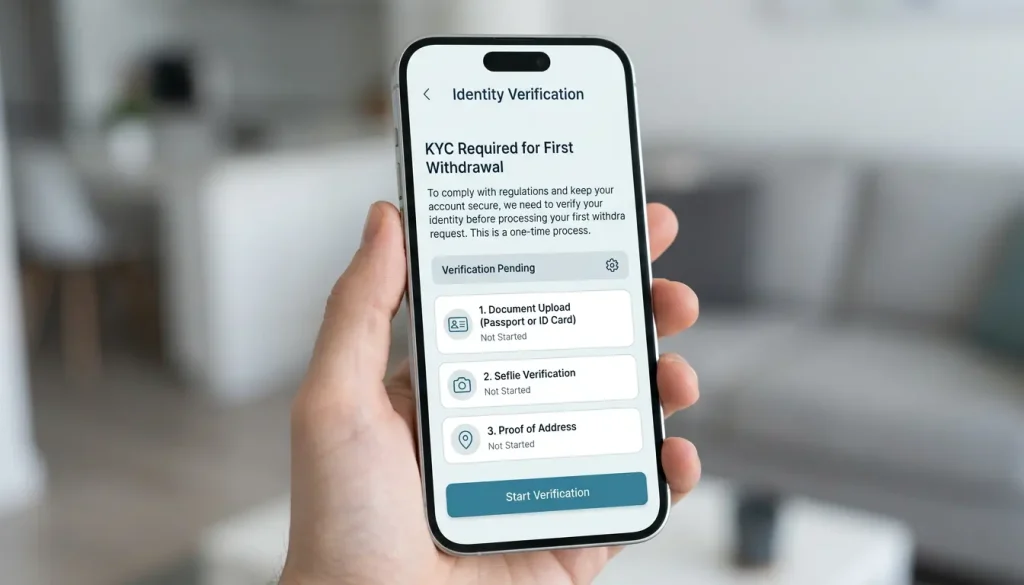
Timing is the part of KYC that catches people off guard, because it rarely happens when you expect. Most players assume verification occurs at sign-up or first deposit. In reality, it most commonly fires at the first withdrawal – the exact moment you are eager to get your winnings and least want a delay.
There is a logic to this. Operators want to reduce friction at the deposit stage to get you playing, so they often let you deposit and play with minimal checks, then run full verification before letting money leave. From their perspective, the withdrawal is the moment money exits their control, so it is the moment the identity check matters most. From your perspective, it means the slowest administrative step lands precisely when your patience is thinnest – which is why I push people to verify proactively rather than reactively.
Beyond the first withdrawal, several other things can trigger or re-trigger verification. A large deposit or withdrawal can prompt enhanced checks. A change to your account details – a new email, a different withdrawal method, a new device or location – can flag a re-verification. And periodic reviews mean an operator may ask you to re-confirm details even on an established account. The same illicit economy that drives source-of-funds checks drives these triggers too; tax fraud alone is estimated to cost Australia between A$1.8 and A$6.3 billion a year, and the checks are part of a broader net cast across financial activity. None of these triggers is a sign you have done anything wrong – they are routine risk responses. Expecting them, rather than being blindsided, is half the battle.
Passing KYC without payout delays
Almost every KYC delay I have seen could have been avoided, because the failures are nearly always procedural rather than substantive. The operator is not rejecting you; it is bouncing a blurry photo or a name that does not quite match. Fix those in advance and verification stops being a bottleneck.
The single biggest lever is to verify early – submit your documents right after signing up, long before you have winnings waiting. This moves the slow step out of your withdrawal path entirely, so when you do cash out, there is nothing left to check. The second lever is consistency: make sure the name on your casino account, your PayID, and your identity documents all match exactly. A mismatch between the name on your PayID and the name on your ID is one of the most common causes of a held payout, because it looks, to an automated system, like funds going to the wrong person.

Beyond that, the practical hygiene matters more than people expect. Submit clear, well-lit, uncropped images where all four corners and all text are legible. Use documents that are current and not expired. If asked for proof of address, use one dated recently. And keep your own copies of everything you submit, so a request to “resend” takes seconds. Done this way, verification at a PayID casino is usually a one-time event measured in hours, not the multi-day ordeal it becomes when documents bounce. The broader reason all of this exists – the money-laundering pressure that shapes every casino’s rules – is covered in our guide to gambling and money laundering in Australia. Treat KYC as a setup task, not a withdrawal-day surprise, and it will rarely cost you more than a single afternoon.
Frequently Asked Questions
Why verify if I paid by PayID?
Because PayID confirms the payment came from your account, but the operator has a separate legal obligation to verify your identity directly. The two are independent checks - one validates the transaction, the other satisfies the casino's own know-your-customer requirement, so paying with PayID does not remove the need for KYC.
Can they ask for source of funds?
Yes, particularly for larger balances or movements. A source-of-funds request asks you to show where your gambling money originated, such as a payslip or bank statement, and it is a standard part of anti-money-laundering compliance rather than a sign of suspicion about you specifically.
How long does KYC take?
When documents are clear and details match, verification is often completed within hours, though it can stretch longer if images are unclear or a name does not match. Verifying early, right after sign-up, and ensuring your account, PayID and ID names align is the most reliable way to keep it fast.
Guides
A Pre-Play Checklist for PayID Casinos
A pre-play checklist for PayID casinos After nine years in this field, I have learned that almost every bad experience a player has with an offshore operator could have been…
Playing Real-Money Pokies With PayID
Playing pokies with PayID Pokies are the reason most Australians end up…
How to Set Up PayID Before You Play
Setting up PayID before you play Setting up a PayID is one…
How Long Does a PayID Withdrawal Take?
A straight answer on PayID payout timing I will not bury the…
PayTo and PayID: How They Differ
PayTo and PayID: how they differ If PayID is the present of…