
What PayID Actually Costs You at a Casino
 Available in US
What PayID actually costs you
The good news is short and worth stating immediately: for the player, a PayID transfer is almost always free. There is no fee to send a PayID payment to a casino, the same way there is no fee when you split a dinner bill with a friend by PayID. The rail itself does not charge you, and that is genuinely one of its strongest selling points.
Table of Contents
But “the PayID transfer is free” is not the same as “playing costs you nothing in fees,” and that gap is where this article lives. The transfer being free does not stop an operator from layering its own charges on top, or a currency conversion from quietly eating into your money, or a withdrawal carrying a cost the deposit did not. The cost of PayID is rarely in PayID; it hides in the things around it.
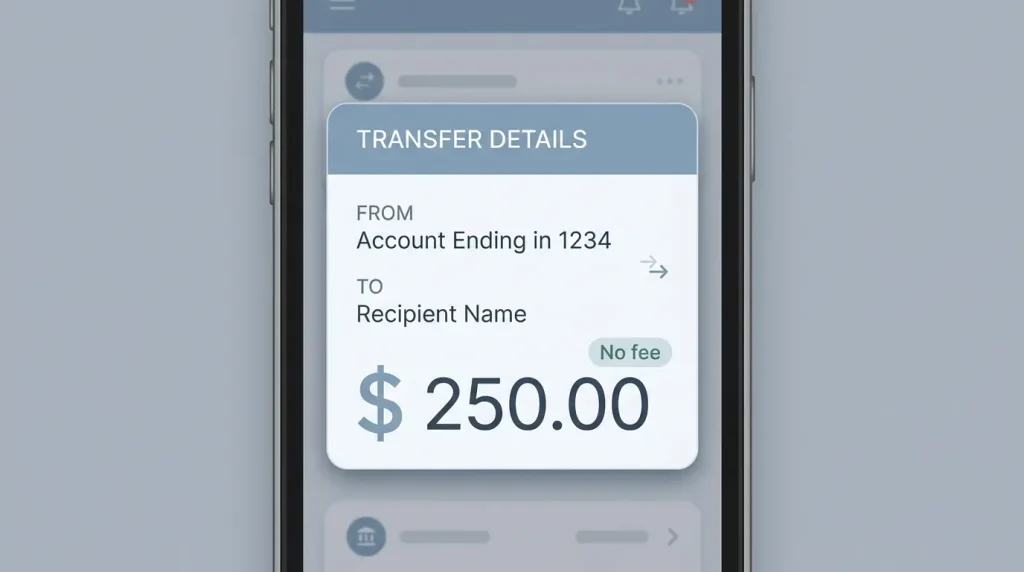
So I want to separate the genuinely free part from the places where costs can still appear, because confusing the two leads people to assume there are no fees anywhere and then be surprised by a charge that had nothing to do with PayID at all. This piece explains why the rail is free, where costs realistically hide, and how the overall cost picture compares with cards and crypto. The headline stays true – PayID itself does not charge you – but the full picture is more useful than the headline.
Why the PayID rail is usually free
To understand why PayID costs you nothing to use, it helps to look at how astonishingly cheap the underlying system is to run. When a payment rail is this inexpensive at the wholesale level, there is simply no fee pressure to pass on to ordinary users.
The numbers are striking. The wholesale cost of a single transaction on the underlying infrastructure fell from around A$0.39 in 2019 to roughly A$0.04 by the 2025 financial year – a cost so low it rounds to nothing from a consumer’s perspective. At four cents a transaction, there is no business case for charging individuals to send a PayID payment, which is exactly why banks generally do not. The economics of the rail are what make it free, not a temporary promotion that might disappear.
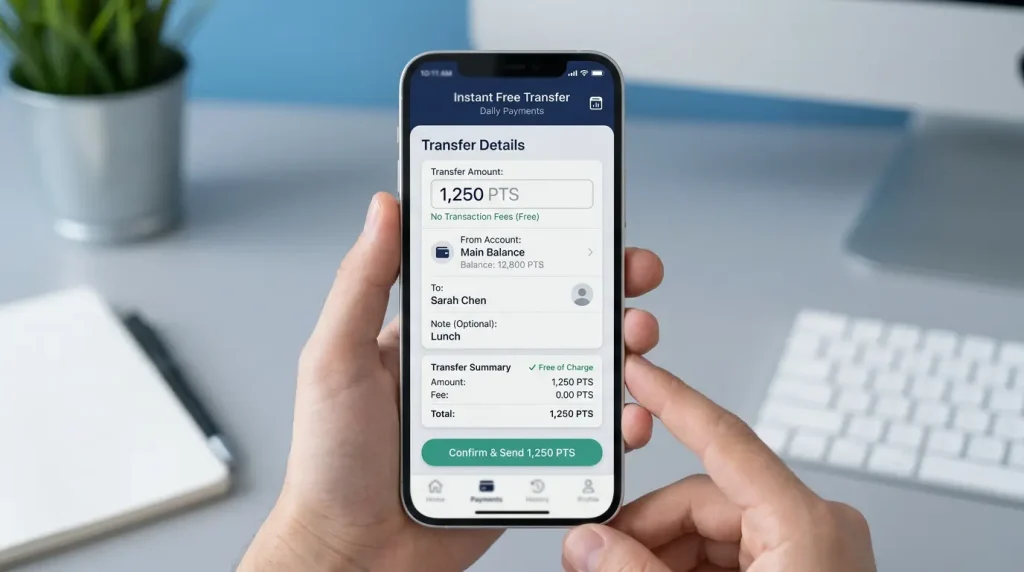
There is also a design philosophy at work, not just an accountant’s calculation. Lynn Kraus of Australian Payments Plus has argued that protection should be built into how we pay from the ground up, rather than handled after the fact. The same ground-up thinking that bakes safety into the rail also keeps it cheap and accessible – a payment system meant to be a national default cannot work if it nickel-and-dimes everyday users. So when you send a PayID deposit, the absence of a fee is not luck or a limited offer; it is the intended state of a rail built to be ubiquitous, instant, and effectively free at the point of use. That reliability is worth internalising: you can treat the PayID transfer itself as a zero-cost action and focus your fee-hunting entirely on what surrounds it. The rail is the one part of the equation you do not have to worry about.
Where costs can still hide
If the rail is free, where do the costs that people occasionally encounter actually come from? There are a few specific hiding places, and knowing them lets you spot a charge for what it is rather than blaming PayID for something it did not do.
The first and most common is operator fees. A casino is free to set its own terms, and some impose a deposit or withdrawal fee, or a fee on certain transactions, entirely independent of the payment method. This is an operator policy, not a PayID charge – the same operator might apply it regardless of how you funded the account. A genuinely transparent operator states any such fees clearly in its banking terms, and the presence of unexpected or poorly-disclosed fees is itself a signal about the operator’s quality.
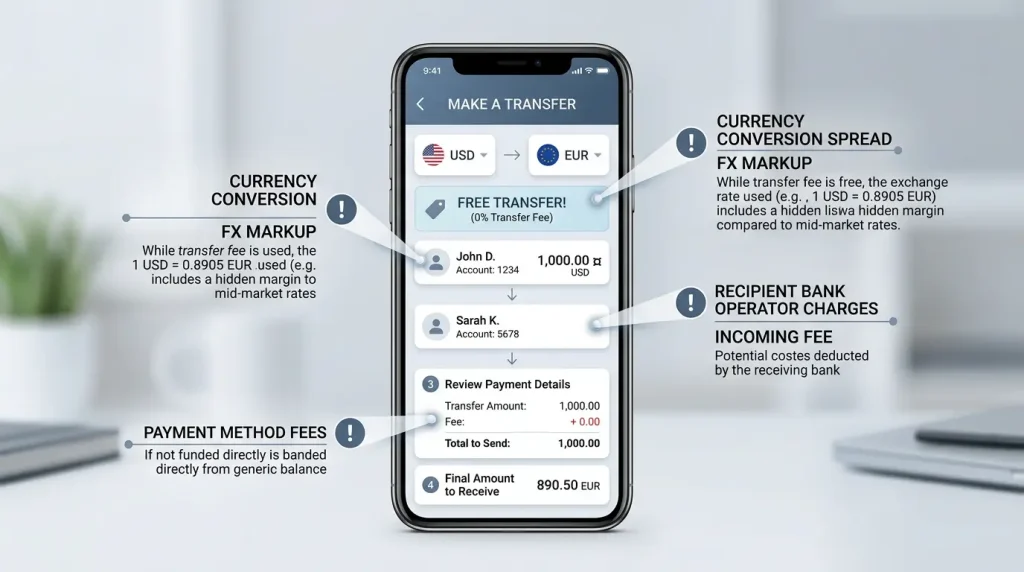
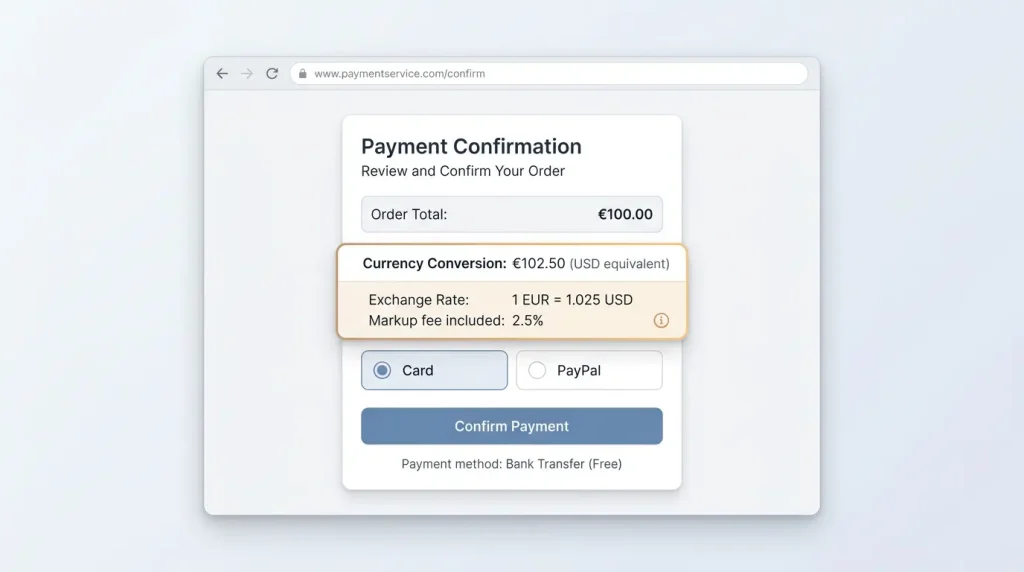
The second hiding place is currency conversion. PayID operates in Australian dollars, but if an offshore operator denominates your balance in another currency, a conversion can happen somewhere in the chain – and conversions carry a spread that costs you, even when no line item says “fee.” Depositing AUD into a balance held in another currency, then converting back on withdrawal, can quietly cost you twice. The third is bank-side oddities: while banks generally do not charge for PayID, an unusual account type or a specific bank policy could in rare cases apply a charge, so it is worth knowing your own account’s terms. The pattern across all three is that the cost lives in the operator, the currency, or the account – never in the PayID rail itself. Read the operator’s terms, watch the currency, and the hidden costs stop being hidden.
Cost versus cards and crypto
Putting PayID’s cost next to the alternatives makes its advantage concrete, because “free” only means so much in isolation – it is the comparison that shows why PayID is the low-cost choice for an Australian player.
Against cards, PayID generally wins on cost in the gambling context, and partly for reasons beyond price: credit cards are now barred from licensed betting altogether, so the comparison is increasingly moot for the regulated sector. Where cards historically carried interchange and sometimes cash-advance-style treatment for gambling transactions, PayID’s account-to-account transfer sidesteps all of that. You are moving your own money on a near-free rail rather than running a transaction through a card network with its associated costs.
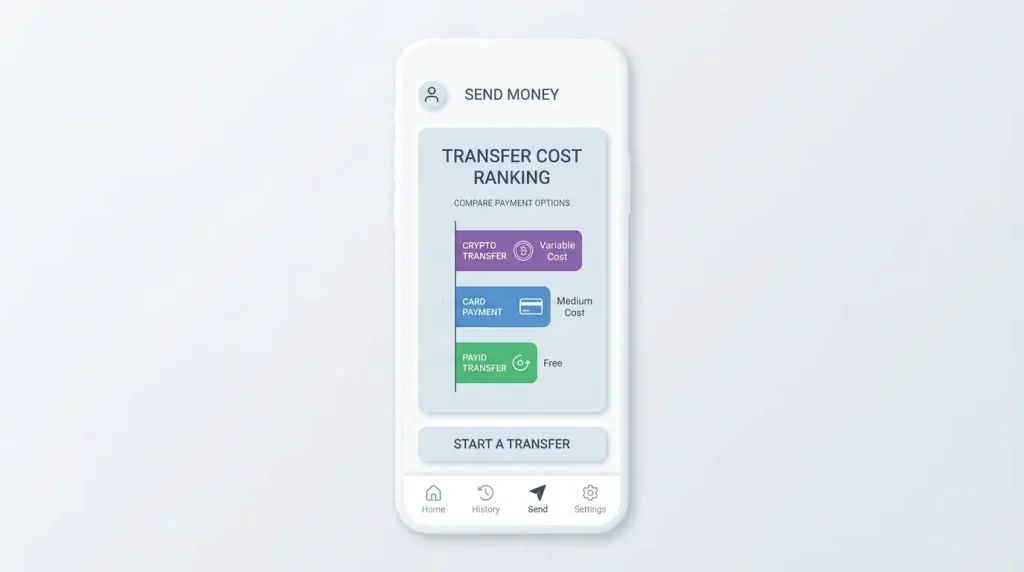
Against crypto, the cost comparison is more interesting and often misunderstood. Crypto is frequently marketed as cheap, but the real cost picture includes network or transaction fees that vary with congestion, exchange fees to convert in and out of Australian dollars, and the spread on those conversions – none of which appear as a simple “deposit fee” but all of which erode your money. On top of that sits volatility, where the value can shift while a transaction or withdrawal is processing, an effective cost that PayID, being denominated in stable Australian dollars, simply does not have. The underlying PayID rail handled around 1.6 billion transactions in a recent year at that four-cent wholesale cost, which is the kind of efficiency that translates directly into a free experience for you. The honest summary is that for an Australian player dealing in Australian dollars, PayID is hard to beat on true, all-in cost – the rail is free, there is no conversion spread, and there is no volatility tax. The fuller head-to-head against crypto, beyond just cost, is covered in our guide to PayID versus crypto casinos.
Frequently Asked Questions
Does my bank charge for PayID?
Generally no. Banks do not typically charge for sending a PayID payment, because the underlying transaction cost is only a few cents, so there is no fee pressure to pass on. A rare exception could arise from an unusual account type or specific bank policy, so checking your own account's terms is worthwhile.
Can a casino add a deposit fee?
Yes. An operator can set its own deposit or withdrawal fees independently of the payment method, so any such charge is an operator policy rather than a PayID cost. A transparent operator states these fees clearly in its banking terms, and unexpected or poorly-disclosed fees are a signal worth heeding about the operator's quality.
Is PayID cheaper than crypto?
For an Australian player dealing in Australian dollars, usually yes on true all-in cost. Crypto's real cost includes network fees, exchange fees, conversion spreads and the risk of value shifting while a transaction processes, whereas PayID is free on the rail, stays in stable Australian dollars, and carries no conversion or volatility cost.
Guides
The Minimum Deposit at a PayID Casino, Explained
The lowest you can deposit with PayID The smallest PayID deposit I have personally made at an Australian-facing operator was A$10, and it bought me exactly what I wanted -…
Why PayID Casinos Ask You to Verify Your Identity
Why PayID casinos ask you to verify The first time a casino…
Why ACMA Blocks Casino Sites
Why ACMA blocks casino sites If a casino site you have used…
How Long Does a PayID Withdrawal Take?
A straight answer on PayID payout timing I will not bury the…
The Credit Card and Crypto Ban for Gambling in Australia
The ban on credit cards and crypto for betting On 11 June…