
When a PayID Deposit Doesn’t Show Up at the Casino
 Available in US
When a PayID deposit doesn’t show up
The most stressful five minutes in online play is the gap between “the money left my account” and “the casino shows nothing.” Your stomach drops, you assume the worst, and the temptation to send another deposit is powerful. Do not. In almost every case I have ever helped untangle, the money is not lost – it is delayed, misreferenced, or sitting unmatched, and it resolves.
Table of Contents
The key thing to hold onto is that PayID runs on extraordinarily reliable infrastructure, and money does not simply vanish into it. When a deposit does not appear, the cause is almost always one of a small set of fixable issues: a missing or wrong reference, an outdated alias, or a short crediting delay on the operator’s side. The funds are somewhere specific, and the job is to locate and reconnect them rather than to panic.
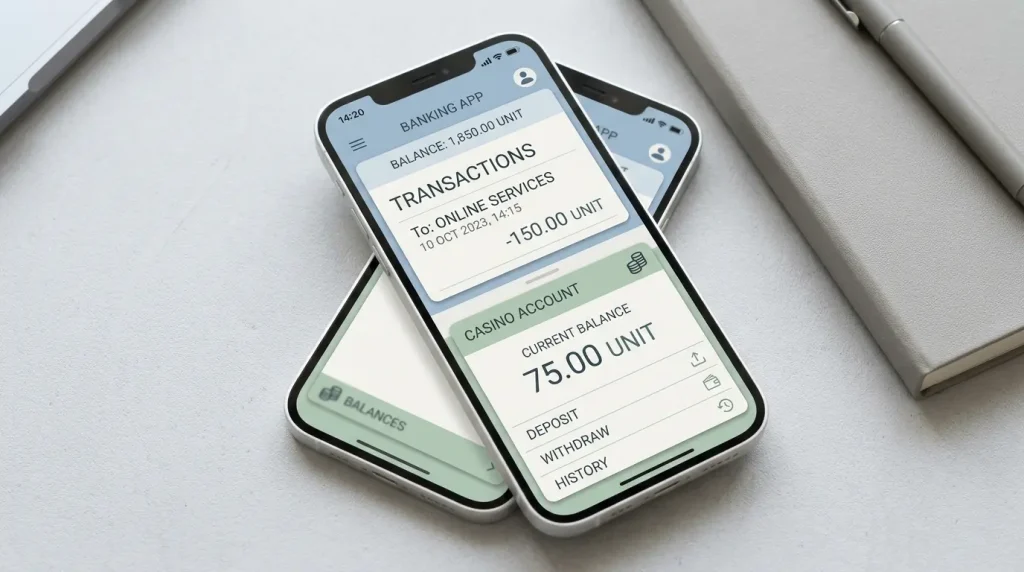
This piece walks the situation calmly, step by step, the way I would if you called me mid-deposit. It covers why a sent deposit can go missing, what to check before you assume anything has gone wrong, and how to get it credited or refunded. Above all it is built around one rule that prevents the single worst outcome: never send a second deposit to fix a missing first one, because that turns one reconciliation problem into two. Your banking app holds the proof you need, and that proof is what makes this almost always solvable.
Why a sent deposit can go missing
To fix a missing deposit, it helps to understand the handful of ways one can go astray, because each has a different remedy. The money has left your account, so the question is where it landed and why the casino has not connected it to you.
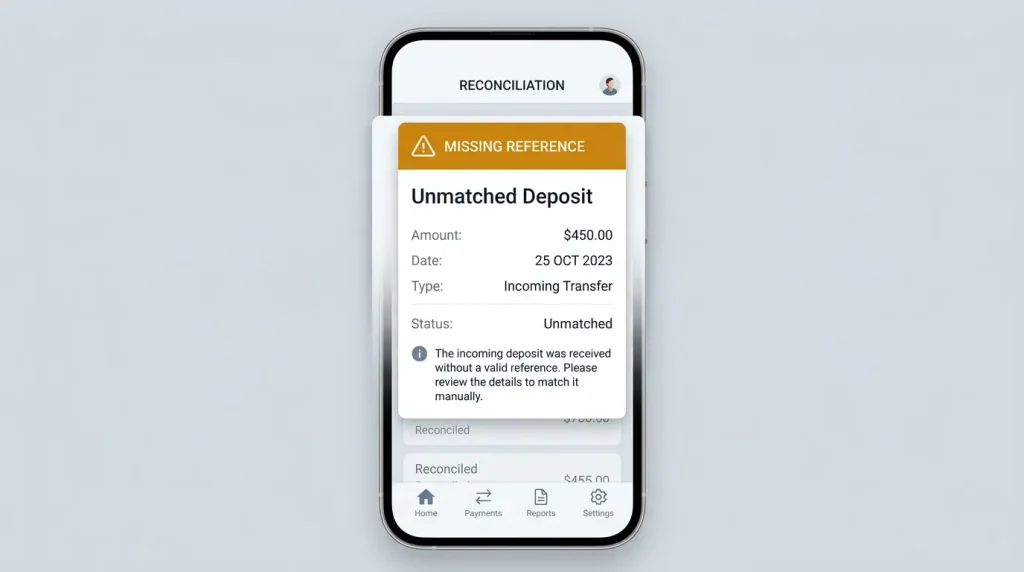
The most common cause is a reference problem. Operators match incoming payments to player accounts using a reference code, and if that reference was missing, mistyped, or stripped out by your bank’s payment field, the money arrives at the operator but their system cannot tell whose account it belongs to. It sits unmatched until someone links it manually. The second common cause is paying an outdated or wrong alias – if the operator rotated its PayID and you paid an old one, or mistyped the alias, the payment may have gone somewhere other than the operator’s current receiving account.
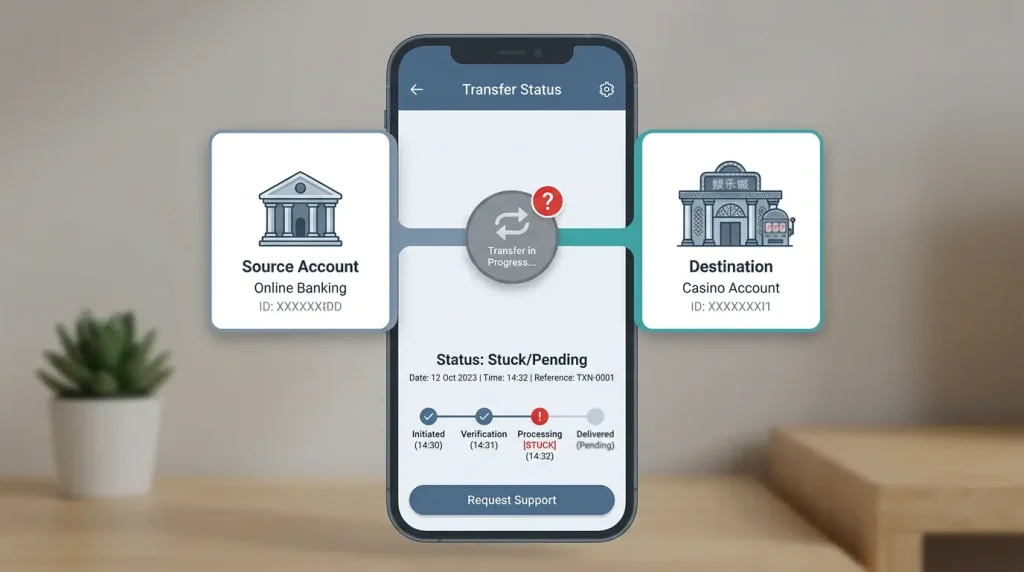
The third cause is the most benign: a simple crediting delay. Although the rail settles in seconds – the platform processed around 1.6 billion transactions in a recent year, with failures genuinely rare – the operator’s step of reading the payment and posting it to your balance can lag by a few minutes if they batch incoming payments or are processing a backlog. This is not a lost deposit; it is a slow credit. The reassuring through-line is that the underlying system almost never loses money. When a deposit goes missing, it has overwhelmingly arrived somewhere identifiable and is waiting to be matched, not disappeared. That distinction – misplaced versus lost – is what should keep you calm while you work the steps, because misplaced money gets found.
What to check before panicking
Before you contact anyone or assume the worst, there is a short sequence of checks you can run yourself, and they resolve a surprising share of cases on the spot. Work them in order, and resist the urge to retry the payment while you do.
First, confirm in your banking app whether the money actually left your account. Sometimes a deposit that “failed” never debited you at all, in which case there is nothing missing – just retry cleanly. If the money did leave, open the transaction and check the details: did you pay the exact alias the casino’s current cashier displays, and did the reference go through in the description field? A reference that is blank or wrong is the single most likely culprit, and spotting it here tells you exactly what to tell support.

Second, give it a short, sensible window. If only a few minutes have passed, a brief crediting delay is plausible and the balance may update on its own – refreshing the cashier rather than re-depositing is the right move. The growing reliability of the addressing layer helps here too: name-checking has become so embedded that Confirmation of Payee was used by Australians more than 100 million times since its July 2025 launch, which means fewer payments go to the wrong place to begin with, and the name you saw confirmed before sending is reassurance that the alias was right. Third, take a screenshot of the completed transfer showing the amount, the recipient, the reference, and the timestamp. That single image is the evidence that resolves nearly every case. Once you have run these checks and a reasonable wait has passed, you are no longer guessing – you know whether the money left, where it was sent, and what reference it carried, which is exactly what is needed to get it sorted.
Getting it credited or refunded
If the self-checks have not resolved it and a reasonable window has passed, the next step is to get the operator to act – and because you did the preparation, this is a quick, evidence-led conversation rather than a frustrating one. The screenshot you took is your leverage.
Contact the operator’s support with the specifics: the amount, the date and time, the alias you paid, the reference you used, and the screenshot showing the completed transfer. With that information, a legitimate operator can locate an unmatched payment and credit it to your account, which is the usual resolution for a reference problem. Be clear and factual rather than agitated; you are not asking for a favour, you are pointing to money that arrived and needs matching. Most reference-related cases resolve once support can see your evidence and tie the payment to your account.
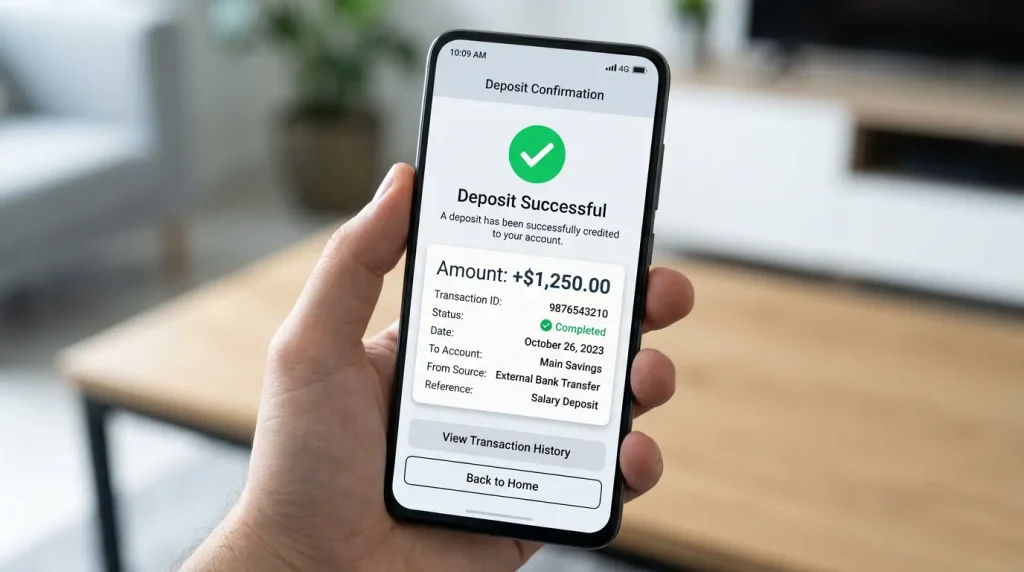
If the deposit genuinely went to the wrong place – an old or incorrect alias – the resolution may instead be a reversal or refund back to your account rather than a credit, which can take a little longer because it involves the payment being returned. Keep your evidence throughout and note who you spoke to and when. As for timing, if a routine crediting delay has stretched well past what a few minutes would explain and support has not resolved it, that is the point to escalate firmly and, if necessary, repeatedly. The reassuring reality is that traceable, account-based payments are recoverable in a way cash never was – the money has a clear origin, destination, and timestamp. If the underlying issue turns out to be a payment that failed rather than one that went missing, the causes and fixes for that are covered in our guide to PayID not working at a casino. The throughline remains: stay calm, keep your evidence, work it methodically, and do not double up – the deposit is almost certainly findable.
Frequently Asked Questions
The money left my account but isn't credited - what now?
First confirm the alias and reference on the completed transfer in your banking app, then give a few minutes for a possible crediting delay before re-depositing anything. If it still has not appeared, contact support with the amount, time, alias, reference and a screenshot, which lets a legitimate operator locate and match an unmatched payment.
Can a wrong reference cause this?
Yes, a missing or mistyped reference is the most common cause, because operators use the reference to match incoming payments to player accounts. The money arrives but sits unmatched until support links it manually, which is why providing the exact reference and a screenshot resolves most of these cases.
How long before I escalate?
A few minutes can be a normal crediting delay, so a short wait and a cashier refresh come first. If a routine credit has stretched well beyond that and support has not resolved it with your evidence in hand, that is the point to escalate firmly and follow up persistently until the payment is matched or refunded.
Guides
What “Instant” Really Means for a PayID Withdrawal
What "instant" really means for PayID payouts "Instant PayID withdrawals" is one of the most reliably misleading phrases in this entire space, and I say that as someone who has…
The Credit Card and Crypto Ban for Gambling in Australia
The ban on credit cards and crypto for betting On 11 June…
Keeping PayID Play Under Control
Keeping PayID play under control There is one feature of PayID that…
Using PayID on Mobile at a Casino
Using PayID on mobile PayID was born on the phone. It lives…
A Pre-Play Checklist for PayID Casinos
A pre-play checklist for PayID casinos After nine years in this field,…