
How a PayID Deposit Works at an Online Casino
 Available in US
Making your first PayID deposit
The first time I ever funded a casino account with PayID, I expected the same fiddly card form everyone has typed a hundred times – long number, expiry, that little code on the back. Instead I copied an email address, hit send in my banking app, and the balance was sitting there before I had finished switching tabs. That gap between what I expected and what actually happened is exactly why I keep coming back to this topic with players.
Table of Contents
A PayID deposit is, at its core, a transfer you make from your own banking app to an alias the casino gives you, and that transfer settles almost instantly because it rides the same real-time rails Australians use for everyday money. What matters for you is the difference from a card deposit: there is no card number changing hands, no merchant storing your sixteen digits, and crucially no chargeback path later. The money moves from your account to theirs as a clean push payment, the way you would pay a mate back for dinner.
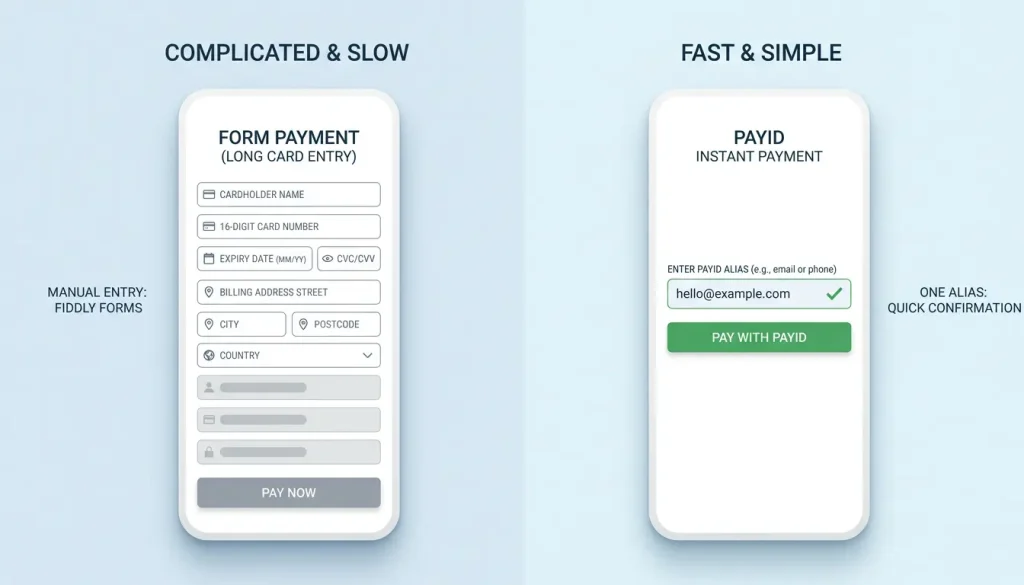
I have spent nine years watching how Australian players move money in and out of operators, and PayID has quietly become the default for a reason. It launched in 2018 as part of the New Payments Platform, and the experience has barely changed since – which, in payments, is a compliment. What follows is the whole deposit flow, the bits that trip people up, and the small habits that keep your first transfer from becoming a support ticket. I will keep it practical, because that is what a deposit deserves.
What you need before depositing
Here is the mistake I see most often: people open the casino’s banking page, see “PayID” listed, and assume that means they are ready. They are not, and the realisation usually arrives at the worst moment, mid-transfer, with the cashier window timing out. A few minutes of prep removes almost every common failure.
First, you need an active PayID linked to your own bank account. That is the alias – a mobile number, an email address, or for some account holders an ABN – registered inside your banking app and pointing at the account you actually want to spend from. If you have ever received money “to your phone number,” you already have one. If you are not sure, the registration takes a couple of minutes and only needs doing once.
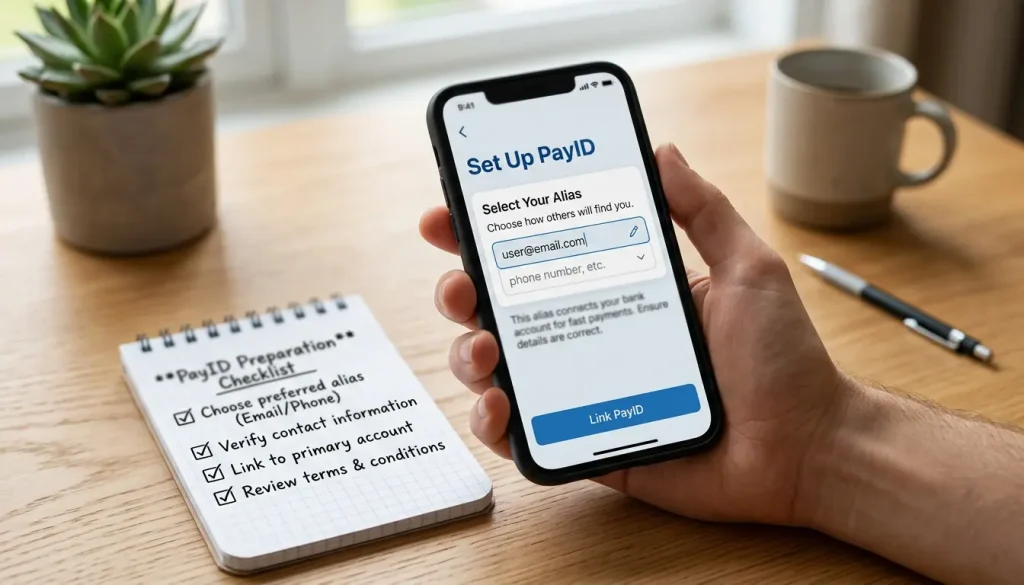
Second, you need enough cleared balance to cover the deposit plus a small buffer. PayID transfers debit instantly, so there is no float and no grace period. Third, and this is the one people skip, you need the casino’s exact PayID details in front of you before you start: the alias they give you and any reference code they ask you to include. Operators rotate these aliases and the reference is how they match your money to your account.
One detail worth internalising early: a PayID transfer is a push, not a pull. The casino cannot reach into your account and take funds – you are the one initiating the movement from your side. That single fact is why I treat the alias and reference as the only two things that genuinely matter. Get those right and the rail does the rest. The system itself has been live and stable since 2018, so the friction you hit is almost never the technology – it is a typo or a missing reference.
Depositing with PayID, step by step
I will walk this the way I would talk a friend through it over the phone, because the order genuinely matters and skipping a step is where deposits go sideways. Have your banking app and the casino cashier open side by side – on mobile, that means being ready to flick between two apps.
Start at the casino. Log in, open the cashier or banking section, and choose PayID as your deposit method. The operator will then display a PayID alias to pay – usually an email address, sometimes a phone number – along with the amount field and, in most cases, a unique reference. Enter the amount you intend to deposit. Take a screenshot or note the alias and reference exactly, including capital letters and dots. This is the single highest-leverage moment in the whole process.
Now switch to your banking app. Find the option to pay someone, then select “Pay to a PayID” rather than entering a BSB and account number. Paste or type the casino’s alias. Your bank performs a name check and shows you the registered account name attached to that PayID before you confirm. Read that name. If it looks like a legitimate payment processor or the operator’s billing entity, continue; if it is gibberish or a personal name you do not recognise, stop and contact support rather than guessing.

Enter the same amount you set at the casino, drop the reference into the description or message field exactly as given, and authorise the payment – usually with a fingerprint, face scan, or PIN. That authorisation is the moment the money leaves. Within seconds the funds clear on the rail, and the casino’s system typically credits your balance moments later once it matches the reference.
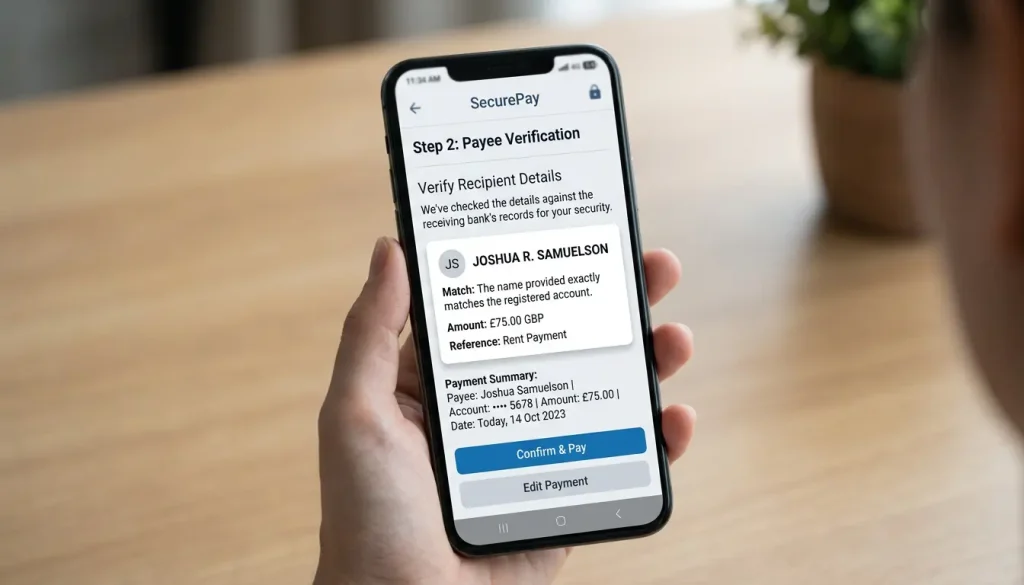
If you remember nothing else, remember this sequence: get the alias and reference at the casino, verify the name in your bank, pay the exact amount with the exact reference. Most failed deposits I have ever diagnosed were a broken link in that chain – a stale alias, a missing reference, or an amount that did not match. The rail is fast and unglamorous; your accuracy is what makes it work. Once you have the rhythm, depositing takes less time than reading this paragraph, and you can read more about the smallest amounts worth sending in our guide to the minimum deposit at PayID casinos.
How fast the deposit shows up
People always ask me the same thing after their first transfer: “Is it stuck?” Almost never. The confusion comes from conflating two separate clocks – how fast the money moves, and how fast the casino notices it moved.
The first clock is genuinely instant. PayID runs on the New Payments Platform, the same infrastructure that processed roughly 1.6 billion transactions worth around AUD 1.99 trillion across 2024, settling around the clock in seconds rather than waiting for batch windows. Your money physically arrives at the operator’s account almost the moment you authorise it. There is no overnight queue, no weekend pause on the transfer itself.
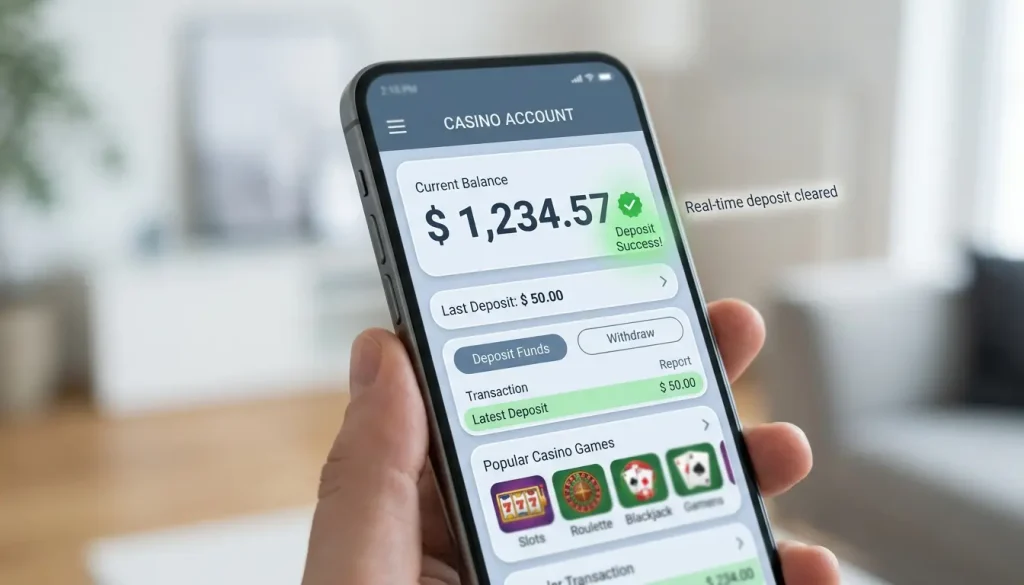
The second clock is the operator’s crediting step – their system has to receive the payment, read your reference, and post the funds to your player balance. With a correct reference this is usually automatic and near-instant, which is why most deposits feel seamless. When it lags, it is almost always because the reference did not come through cleanly or the operator batches incoming payments every few minutes rather than in real time. A short wait of a minute or two is normal; an hour is not, and at that point it is a support conversation, not a patience exercise. The rail did its job in seconds – any delay you feel lives on the casino’s side of the wall.
Common deposit hiccups
I keep a mental shortlist of the deposit problems that come up again and again, because nearly all of them are preventable and none of them mean your money has vanished. Knowing the pattern saves the panic.
The most frequent is a missing or wrong reference – the money lands at the operator but their system cannot tell whose account it belongs to, so it sits unmatched until support links it manually. The second is an outdated alias: operators rotate PayID addresses, and players sometimes pay an old one saved from a previous session. The third is a bank-side block, where your bank flags a transfer to a gambling-associated payee and pauses it for a security check, sometimes prompting you to confirm by text.
Less common but worth naming: an amount that does not match what you entered at the casino, which can confuse automated matching, and the rare genuine processing delay. If a deposit does not appear, do not send a second one – that just creates two payments to reconcile. Keep your banking app’s transaction record, which shows the money left your account, and that single screenshot resolves almost every dispute in minutes. The traceability of the rail is your friend here; unlike cash, every PayID movement leaves a clean, timestamped trail you can point to.
Frequently Asked Questions
Do I deposit from my banking app or the casino site?
Both, in sequence. You start at the casino cashier to get the PayID alias and reference, then complete the actual payment inside your own banking app where you authorise it. The casino never debits you directly - you push the funds from your side.
Why does the casino show a PayID email instead of a phone number?
A PayID alias can be a mobile number, an email address, or an ABN, and many operators register theirs to an email because it is more stable and easier to display in a cashier. It works exactly the same way as a phone-based PayID - you pay the alias your bank shows, whatever its form.
Is there a minimum first deposit?
Yes, most operators set one, commonly around A$10 to A$20, and it is a casino rule rather than a PayID limit. The rail itself imposes no minimum, so any threshold you see is set by the operator's terms.
Guides
Keeping PayID Play Under Control
Keeping PayID play under control There is one feature of PayID that almost nobody markets, and it is the one I value most: every transfer you make shows up, plainly…
PayID vs POLi for Casino Payments
PayID and POLi: two Aussie bank methods For a long time, if…
How Long Does a PayID Withdrawal Take?
A straight answer on PayID payout timing I will not bury the…
Why Money Laundering Shapes Casino Rules
Why money laundering shapes casino rules Every time a casino asks where…
Using PayID on Mobile at a Casino
Using PayID on mobile PayID was born on the phone. It lives…