
How Anonymous PayID Really Is at a Casino
 Available in US
How anonymous PayID really is
I get asked whether PayID lets you gamble anonymously more often than almost any other question, and the honest answer disappoints people: no, it does not, and believing it does can get you into trouble. The confusion is understandable, because PayID genuinely hides something – just not the thing people assume.
Table of Contents
What PayID hides is your account details from the recipient. When you pay a casino with PayID, the operator sees the alias and the payment, not your BSB and account number. That is a real privacy benefit. But hiding your account number from a merchant is a very different thing from being anonymous. Your PayID alias is registered to a bank account, that account is tied to your verified legal identity, and every transfer you make leaves a clean, timestamped record in the banking system. Anonymity is precisely what you do not have.
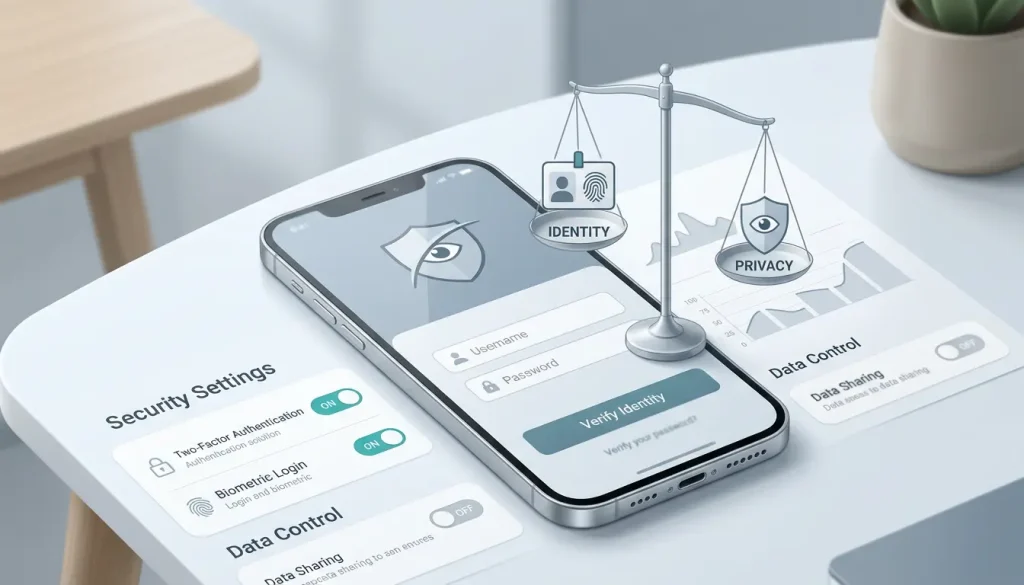
This distinction is not academic. Players who treat PayID as anonymous sometimes assume a casino cannot or will not ask who they are – and then are surprised by identity verification at withdrawal. The truth is the opposite: PayID is one of the more traceable ways to move money, by design, because it sits inside a regulated banking system built to know who is paying whom. This piece separates the myth from the reality, explains why casinos verify you regardless, and then gives PayID full credit for the genuine privacy it does provide. The point is accuracy, not discouragement.
An alias is not anonymity
The word “alias” does a lot of damage here, because it sounds like a disguise. In PayID’s world, an alias is not a mask – it is a forwarding address that points straight back to you. Understanding that one fact corrects most of the misconceptions in this space.
When you register a PayID, you link a memorable identifier – your phone number or email – to a specific bank account in your name. The alias is just a convenient label for that account. Anyone who pays your PayID is paying your real account; anyone whose PayID you pay sees, via the name check, the name registered to your account. The alias does not sever the connection between the payment and your identity. It simply replaces a long account number with a short, human-friendly one, while the underlying account remains fully identified.
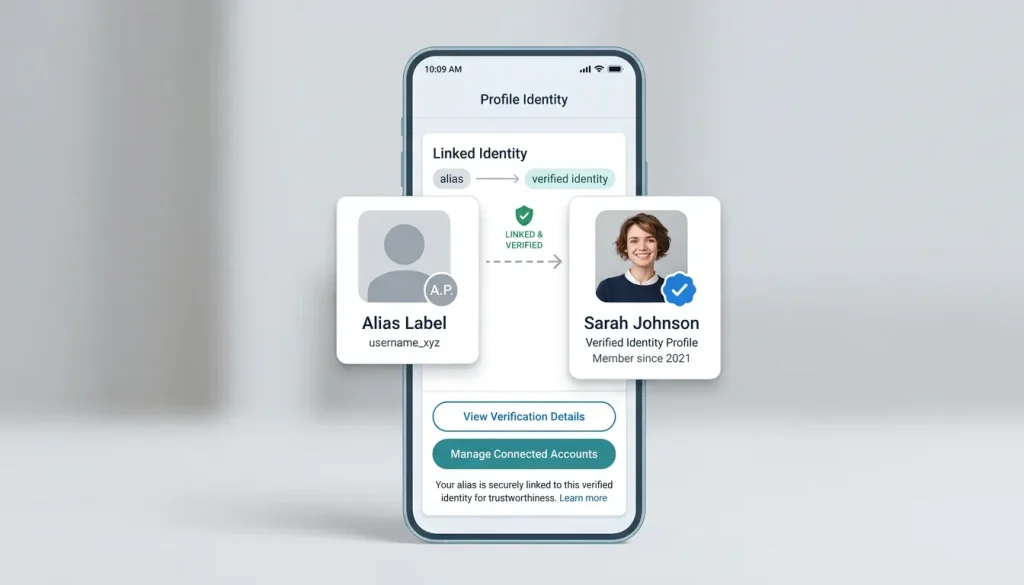
This is the opposite of how some other payment methods are marketed. The appeal of certain alternatives rests on pseudonymity – the idea that a payment can be detached from a named individual. PayID makes no such offer and never has. It is a regulated, account-linked, name-verified system, and its entire trust model depends on payments being attributable. So when you see a casino accepting PayID, do not read it as “a way to play without revealing who you are.” Read it as “a way to pay without handing the operator your account number” – which is a real and useful privacy feature, but a much narrower one than anonymity. The alias protects your banking plumbing, not your identity. Conflating the two is the single most common error I correct, and it is the one most likely to cause an unpleasant surprise later.
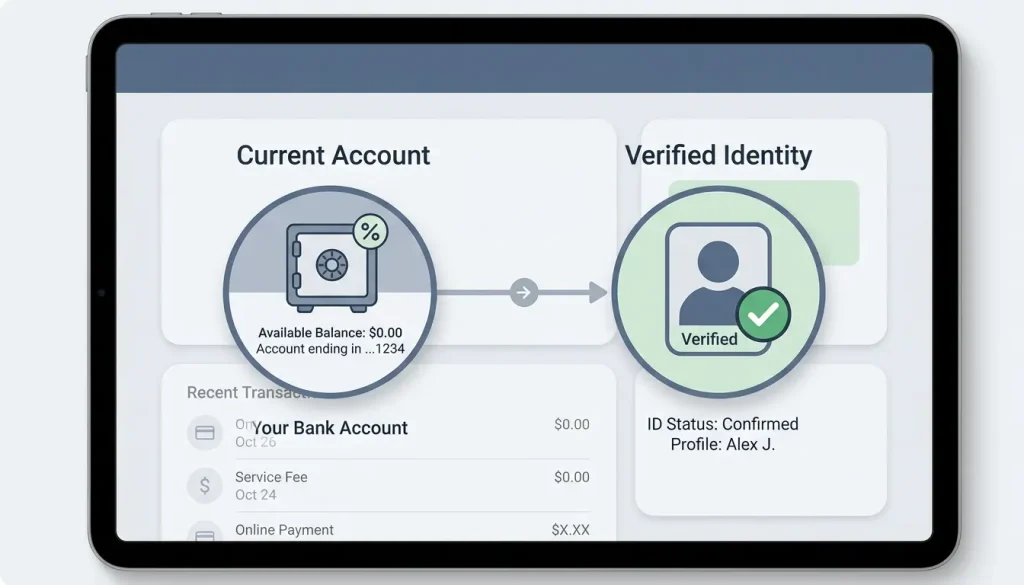
Why casinos still verify your identity
Even if PayID offered perfect anonymity – which it does not – casinos would still have to verify who you are, because the obligation comes from law, not from your payment method. This is the part players most want to skip and the part that is least skippable.
Operators that handle real money sit inside an anti-money-laundering framework that requires them to know their customers. The reason that framework exists is not bureaucratic box-ticking; it is that gambling is a recognised channel for cleaning illicit funds. Serious and organised crime costs Australia more than A$68 billion a year, and the systems built to disrupt it lean heavily on knowing the real identity behind money as it moves. A casino that let anyone deposit and withdraw without ever confirming identity would be an open laundering pipe, which is exactly why verification is mandatory rather than optional.
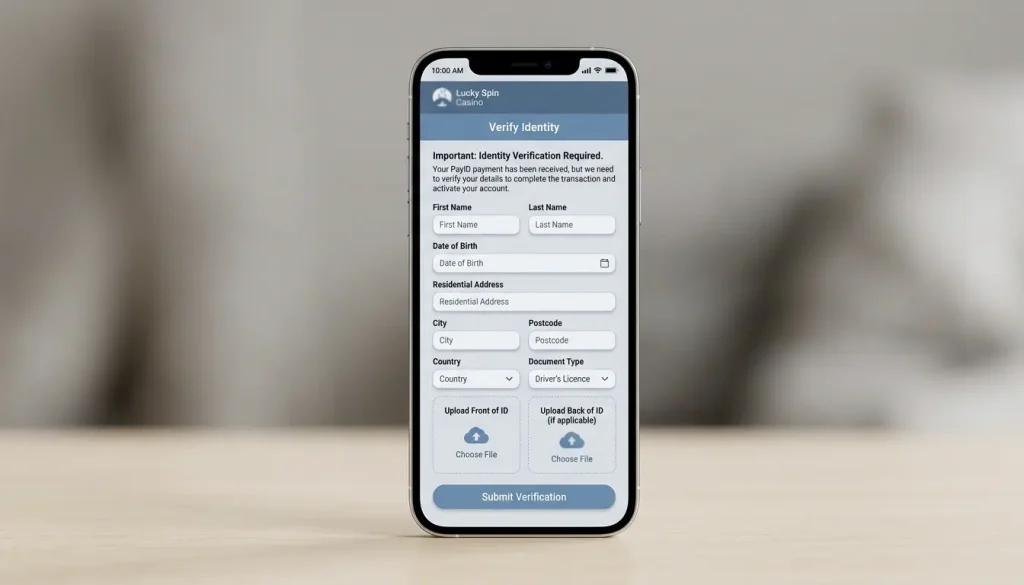
The scale of that risk is not abstract. An official inquiry concluded that a significant share of the roughly A$95 billion lost in New South Wales poker machines in a single year was likely “dirty money” – funds run through gambling to obscure their origin. That is the backdrop against which every identity check is set. So when a PayID casino asks for your ID before releasing a withdrawal, it is not doubting you personally; it is meeting an obligation designed to keep the entire system from becoming a money-laundering vehicle. Your PayID payment, far from making you anonymous, actually provides a clean trail that supports exactly this kind of verification. The detail of what that verification involves and when it triggers is covered in our guide to PayID casino KYC verification. Anonymity and a functioning, lawful casino are fundamentally incompatible, and PayID lands firmly on the lawful side.
The privacy PayID genuinely offers
None of this means PayID gives you nothing – it gives you a specific, real form of privacy, and I want to end by stating it clearly so the genuine benefit does not get lost in the anonymity correction. PayID protects your banking details, and that is worth having.
Concretely, here is what you actually gain. The casino never receives your BSB and account number, so those details are never stored on an operator’s systems, never sit in a database that could be breached, and never travel further than your own bank. With a card, the merchant handles your card number; with PayID, the operator handles only an alias and a payment. That reduction in exposed data is a meaningful reduction in risk, especially when dealing with offshore operators whose data-security practices you cannot fully inspect.
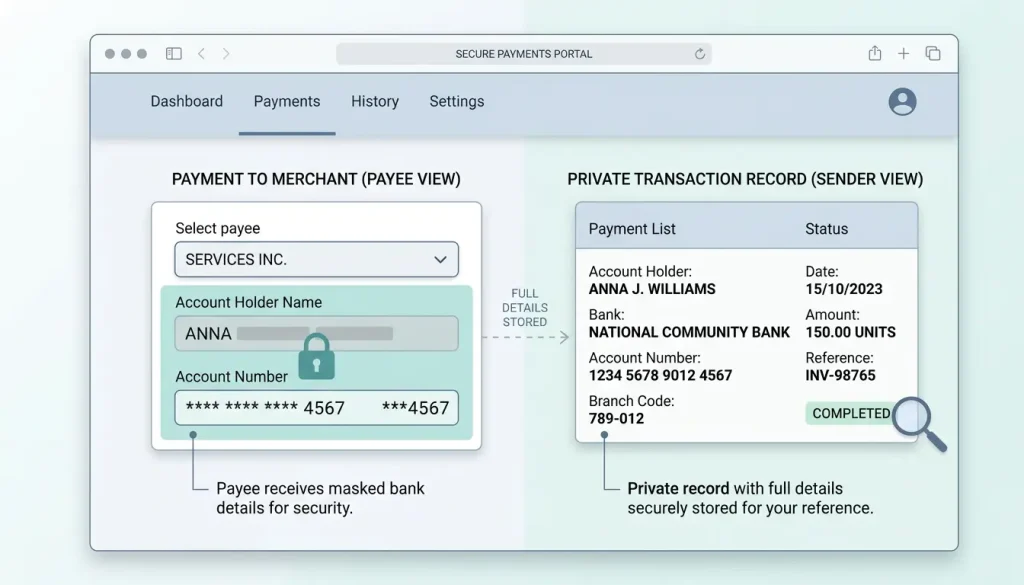
You also gain control over what your alias reveals. You choose which alias to register and which account it points to, so you decide how much of your contact information is in play. What you do not get – and should never expect – is concealment of the payment from your own bank, from the regulated system, or from the casino’s lawful identity checks. The right mental model is this: PayID is privacy from the merchant’s prying eyes, not invisibility from the system. For a casino player, that is genuinely valuable, because keeping your account details out of an offshore operator’s hands is a sensible precaution. Just hold the benefit at its true size. You are paying privately, in the sense that your banking details stay yours; you are not paying anonymously, and you never were.
Frequently Asked Questions
Does the casino see my bank details via PayID?
No. When you pay with PayID, the operator receives the alias and the payment, not your BSB and account number, so those details never reach the casino's systems. That is the genuine privacy benefit PayID provides - your banking plumbing stays with your bank rather than being stored by the operator.
Can I gamble anonymously with PayID?
No. Your PayID alias is linked to a bank account tied to your verified identity, and every transfer leaves a traceable record, so PayID is one of the more identifiable ways to pay rather than an anonymous one. Casinos are also legally required to verify your identity regardless of how you fund the account.
Who can see my PayID alias?
The person or business you pay sees your alias and, through the name check, the name registered to your account, while your bank sees the full transaction as part of the regulated system. The alias hides your account number from the recipient but does not hide your identity from the bank or from lawful verification.
Guides
Using PayID on Mobile at a Casino
Using PayID on mobile PayID was born on the phone. It lives inside banking apps, it is authorised with a fingerprint or a face scan, and the whole experience assumes…
Why ACMA Blocks Casino Sites
Why ACMA blocks casino sites If a casino site you have used…
NPP and Osko Explained: The Rails Behind PayID
The rails that make PayID instant Most people use PayID for years…
How to Set Up PayID Before You Play
Setting up PayID before you play Setting up a PayID is one…
Playing Real-Money Pokies With PayID
Playing pokies with PayID Pokies are the reason most Australians end up…