
PayID vs a Standard Bank Transfer for Casino Payments
 Available in US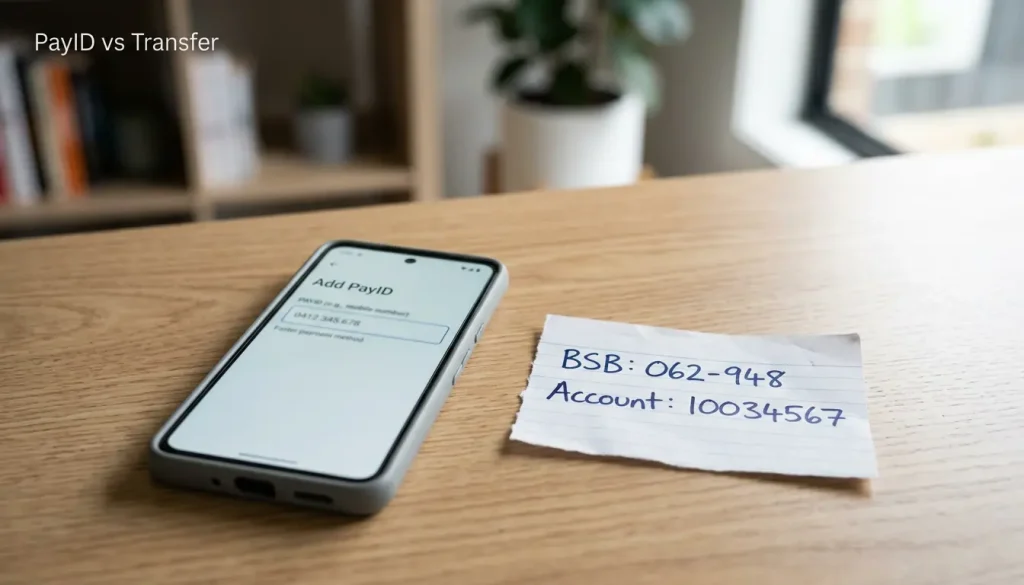
PayID vs a standard bank transfer
Plenty of people assume PayID and a regular bank transfer are basically the same thing – money moving from one account to another. They are not, and the difference is bigger than it looks. One uses a simple address and a real-time rail with a built-in name check; the other uses a string of digits and, traditionally, a slower batch process. Both move money from your bank, but the experience and the safety margins are not equivalent.
Table of Contents
A standard bank transfer asks you for the recipient’s BSB and account number, then sends the payment, historically without showing you whose account those numbers belong to. PayID replaces the numbers with an alias like a phone number or email, resolves it to the right account, and shows you the registered name before you confirm. The mechanics underneath have converged somewhat as real-time rails have spread, but the addressing and verification differences remain genuinely meaningful for a casino deposit.
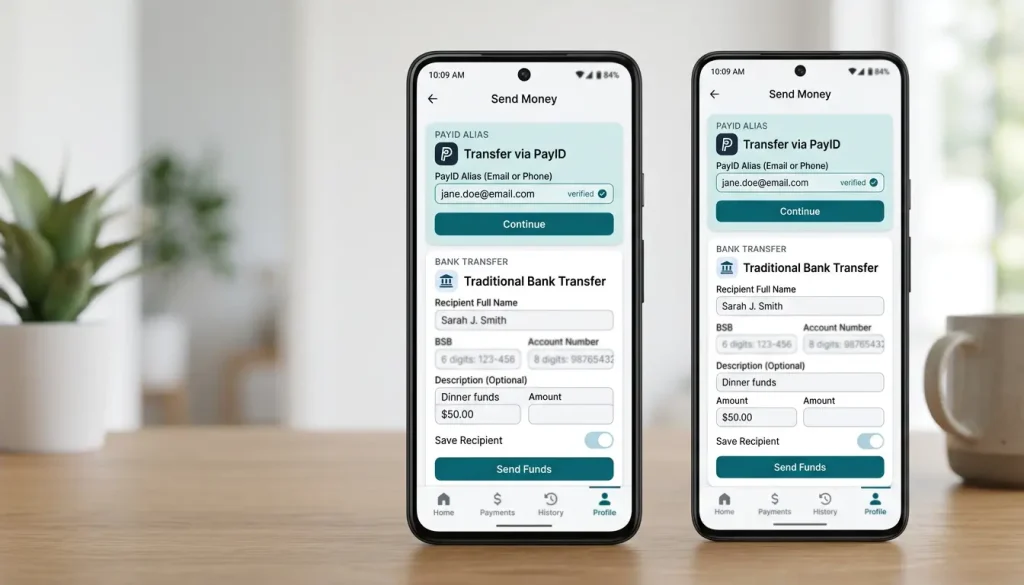
This piece walks through the core difference between addressing by alias and addressing by account number, what each means for speed and for the chance of a costly error, and how all of it changes the practical experience of funding a casino account. The headline is simple – around one in three Australians had already used PayID for personal transfers by 2023, and once you have, the old account-number method starts to feel needlessly fragile. But the detail is where the real value of the comparison lives.
Address vs BSB-and-account-number
The single biggest difference between the two methods is how you tell the system where the money should go, and that one design choice ripples out into everything else. It is worth slowing down on.
A traditional bank transfer addresses money the way the banking system always has: with a BSB, which identifies the bank and branch, and an account number, which identifies the specific account. You type these digits in, and the system sends the money to whatever account matches them. The system has historically done what you told it, with no independent check on whether those numbers belong to the person you intended to pay. A transposed digit sends your money to a stranger, and recovering it can be difficult.
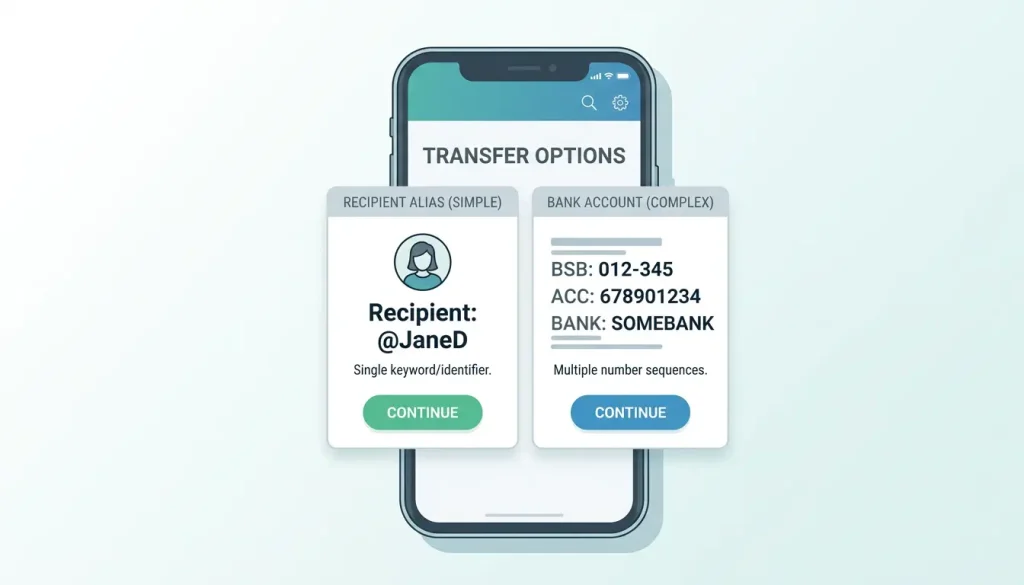
PayID addresses money differently. Instead of digits, you use an alias – a phone number, email, or business number – that the system resolves to the underlying account. Two things follow from this. First, the alias is far easier to get right than a string of digits, because you already know your own phone number and a casino’s email alias is visible on screen rather than transcribed from a statement. Second, and more importantly, PayID shows you the registered account name before you confirm, so you see who you are about to pay. The old account-number method asked you to trust the numbers blindly; PayID lets you verify the destination by name. That shift, from a blind string of digits to a verified human-readable address, is the heart of the difference, and it is the reason errors that used to be common become much rarer.
Speed, errors and name-check
Once you understand the addressing difference, the practical consequences for speed and for mistakes follow almost automatically. These are the things you actually notice as a player.
On speed, PayID rides real-time infrastructure that settles continuously, around the clock – the platform processed roughly 1.6 billion transactions in a recent year, all on rails built for instant movement. A traditional bank transfer, depending on the banks and the method, may settle in real time on modern rails or may still pass through slower processing windows, particularly for older transfer types or across certain institutions. The point is not that every bank transfer is slow – many now settle quickly – but that PayID’s speed is consistent and guaranteed by the rail, whereas a plain transfer’s speed depends on the route it takes.
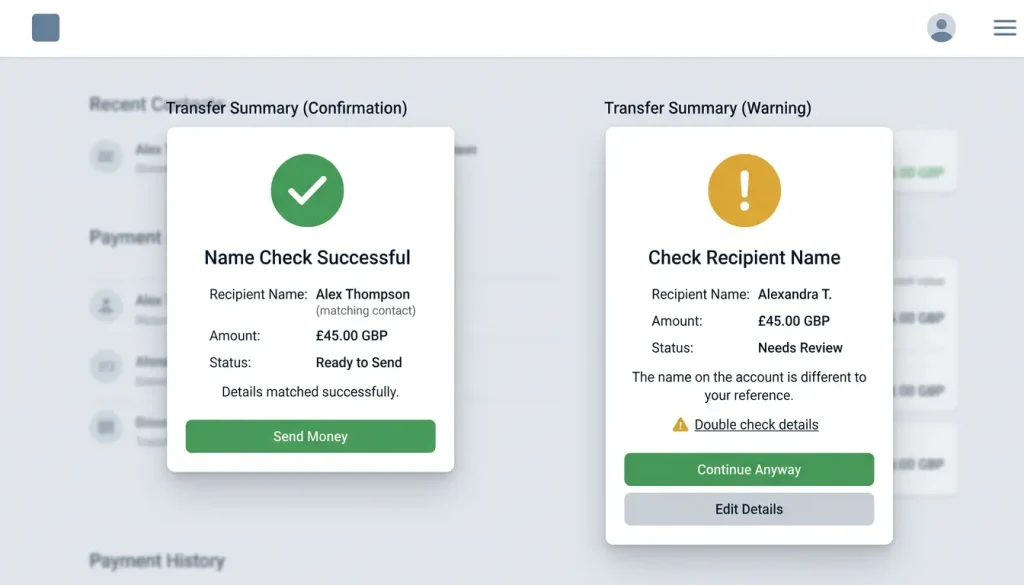
On errors, the name check is the decisive advantage. With a traditional transfer addressed only by account number, a mistake in the digits historically sailed straight through, and the chilling part is how preventable those losses were. The name-verification layer now spreading across Australian banking directly attacks this: research found that one in four users stopped or adjusted a payment after seeing the recipient’s name before sending. That is a quarter of payments where someone caught an error or a fraud they would otherwise have completed. A PayID payment surfaces that name as a normal part of the flow, so the error rate for sending money to the wrong place drops sharply compared with the old type-the-digits-and-hope approach. Speed is nice; not losing your deposit to a typo is better.
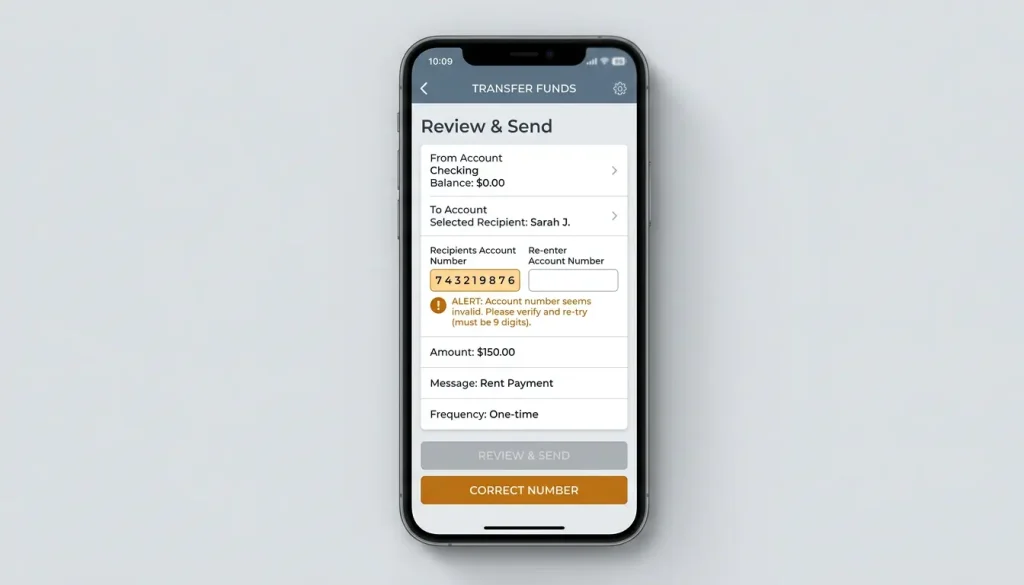
What this changes for casino payments
Bringing it back to the actual task – funding a casino account – the addressing and verification differences translate into a handful of concrete advantages that explain why operators and players both gravitate toward PayID.
For deposits, PayID is simply less error-prone. A casino displays an alias; you pay it; your bank confirms the name behind it before you commit. Compare that with transcribing a BSB and account number from a cashier screen into your banking app, with no check on whether you got it right until the money has already gone. The name check turns a deposit from an act of faith into a verified action, which matters more when you are dealing with offshore operators whose details you cannot independently confirm. Seeing a coherent payment-processor name in the check is a small but real piece of reassurance.
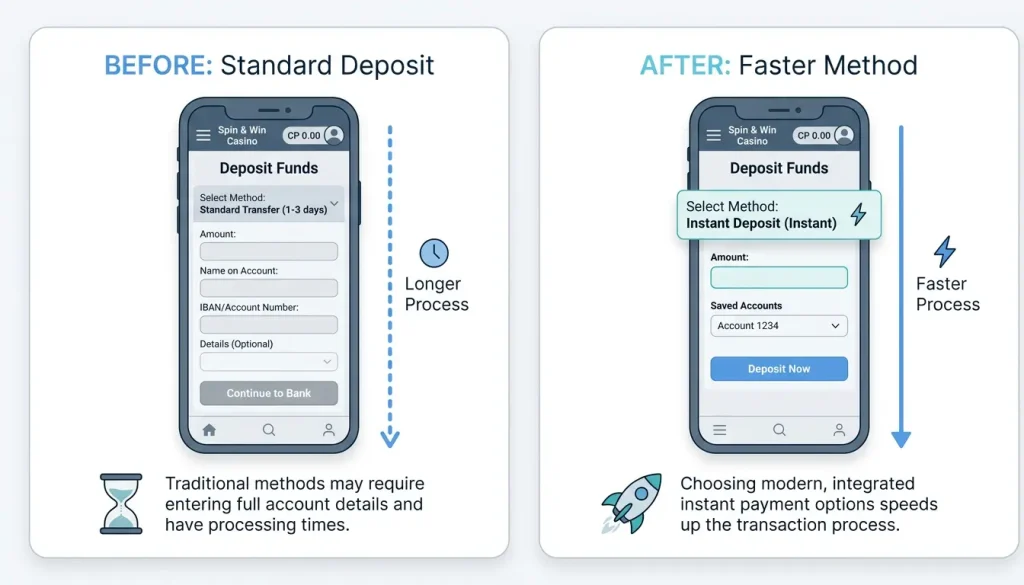
The consistency of speed matters too. With PayID you can rely on the deposit crediting near-instantly, so you are not left wondering whether a slow transfer is stuck or simply working through a batch window. And because PayID is native infrastructure rather than a manual transfer, operators can automate the matching of incoming payments more cleanly, which is part of why PayID deposits tend to credit faster and more reliably than a player-initiated bank transfer with a typed reference. The deeper reason all of this works – the real-time platform and addressing service underneath both methods – is covered in our guide to NPP and Osko explained. The short version: a bank transfer can do the job, but PayID does the same job with a built-in safety net and a guaranteed clock, which is why it has become the default for funding play.
Frequently Asked Questions
Is a bank transfer slower than PayID?
It can be. PayID settles in real time on rails built for instant movement, while a traditional bank transfer's speed depends on the route it takes and may pass through slower processing windows for some transfer types or institutions. PayID's speed is consistent and guaranteed by the rail, whereas a plain transfer's is not.
Can I still mistype a PayID?
It is far harder to send money to the wrong place with PayID, because you address it with a familiar alias rather than a long string of digits, and the system shows you the registered account name before you confirm. That name check catches mismatches that a traditional account-number transfer would have let through unchecked.
Why do casinos prefer PayID over transfers?
PayID credits near-instantly and lets operators automate the matching of incoming payments more cleanly than a manually entered bank transfer with a typed reference. That reliability and speed, combined with fewer addressing errors, is why many operators favour PayID for deposits over a player-initiated standard transfer.
Guides
How Long Does a PayID Withdrawal Take?
A straight answer on PayID payout timing I will not bury the answer, because you came here for a number and you deserve one. The payment rail takes seconds. The…
Can You Actually Withdraw With PayID, or Only Deposit?
Can you actually withdraw with PayID? Here is a frustration I hear…
Using PayID on Mobile at a Casino
Using PayID on mobile PayID was born on the phone. It lives…
How a PayID Deposit Works at an Online Casino
Making your first PayID deposit The first time I ever funded a…
NPP and Osko Explained: The Rails Behind PayID
The rails that make PayID instant Most people use PayID for years…