
Why ACMA Blocks Casino Sites
 Available in US
Why ACMA blocks casino sites
If a casino site you have used suddenly stops loading and your internet provider shows a block notice, your first thought is probably that you did something wrong. You did not. The block is aimed at the operator, not at you, and understanding why it happened is far more reassuring than the abrupt error page suggests.
Table of Contents
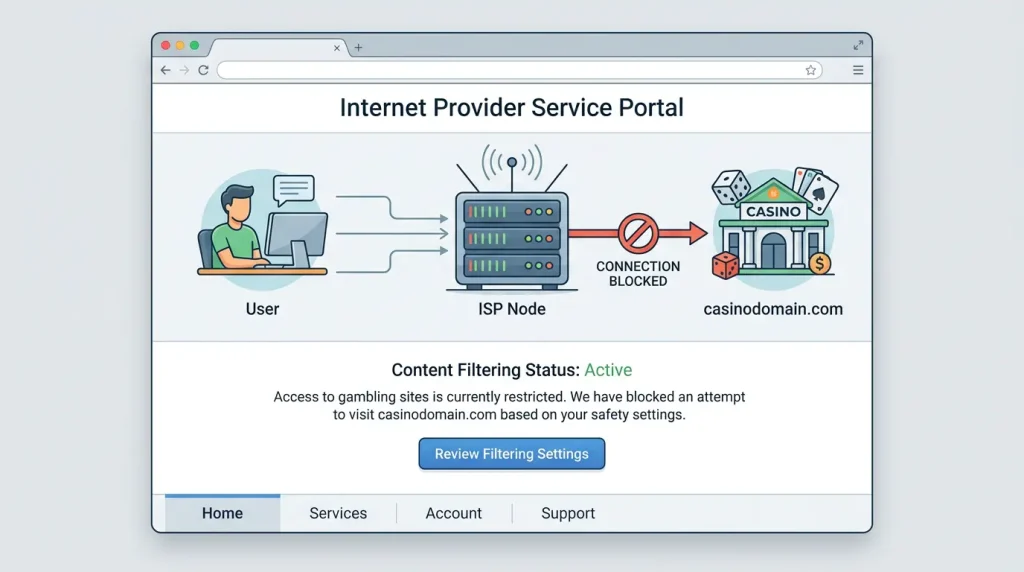
The body doing the blocking is the Australian Communications and Media Authority, the regulator that enforces the country’s online gambling rules. When it identifies an illegal offshore operator targeting Australians, it can request that internet providers block access to that site at the network level. The result is the error you see – access to the operator is cut off across providers, not because of anything in your account, but because the operator was found to be operating unlawfully.
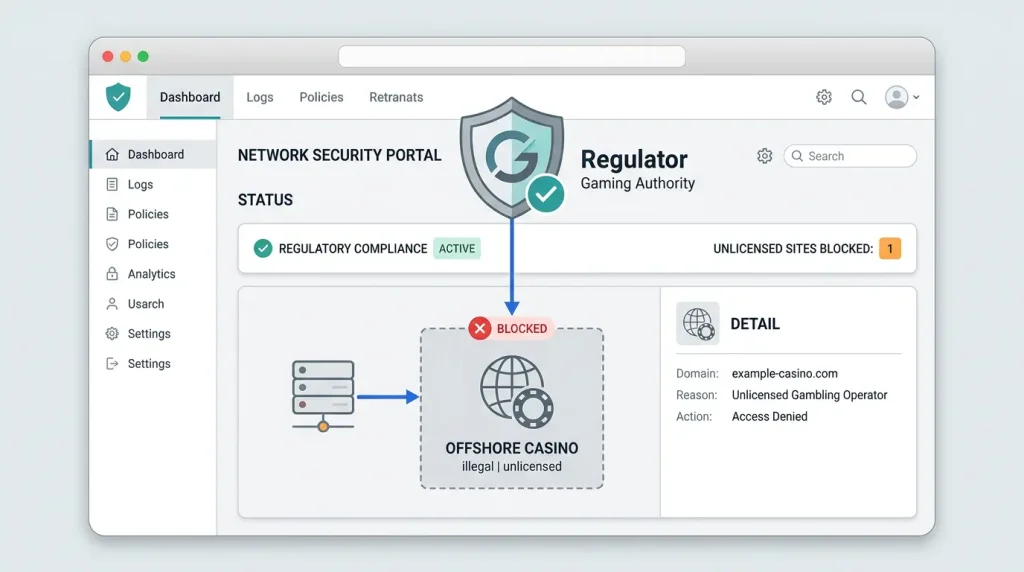
This is one of the most misunderstood parts of the Australian online casino landscape, partly because the reason these operators are illegal in the first place is rarely explained. This piece covers how the blocking process actually works, the scale it has reached, and – most importantly for you – what a block means for any money or account you had with a blocked site. The honest framing matters: these blocks are a sign of an active regulator dealing with operators that should not have been serving Australians, and knowing that changes how you read the error page.
How the blocking process works
The blocking system is more deliberate than the sudden error page implies. It is not an automatic filter sweeping the internet – it is an investigative process that ends in a specific instruction to internet providers, and seeing the steps makes it less mysterious.
It generally starts with the regulator identifying a service that appears to be offering prohibited online gambling to Australians, often prompted by public complaints. The regulator investigates whether the operator is breaching the law – for online casino games, the relevant point is that these are not permitted to be offered to Australians by unlicensed offshore operators. If a breach is established, the regulator can issue formal warnings and, where appropriate, request that internet providers block the site so that Australians can no longer easily reach it.
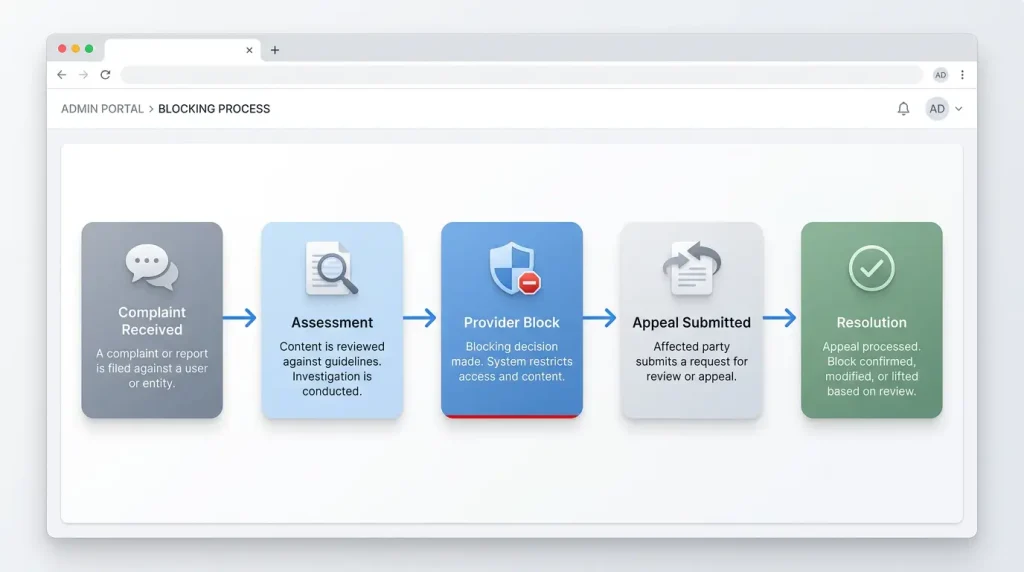
The activity behind this is steady and substantial. In a single recent quarter, the regulator assessed 292 of 330 reports it received, opened 20 investigations, issued 10 formal warnings, and identified 73 sites breaching the law – a snapshot of an enforcement machine running continuously rather than occasionally. The blocks themselves are implemented at the network level by providers, which is why a blocked site fails to load regardless of which provider you use. It is worth noting what the block does and does not do: it makes the site hard to reach through normal means, but it is a disruption measure aimed at the operator’s access to the market, not a personal action against anyone who used the site. The target is always the unlawful service, and the mechanism is designed to cut its reach into Australia.
The scale of blocking so far
When people hear about a single blocked site, they tend to assume it is a rare event. It is not. The cumulative scale of blocking tells a story about how large the offshore-operator problem has been and how persistently the regulator has worked at it.
From the first blocking request in November 2019 through December 2025, 1,455 illegal gambling and affiliate sites were blocked – a figure that reframes any individual block as one entry in a very long list. This is not a handful of bad actors; it is a sustained campaign against a large population of operators and the affiliate sites that funnel players toward them. The inclusion of affiliate sites in that count is telling, because it shows the regulator targeting not just the casinos themselves but the marketing ecosystem that points Australians at them.
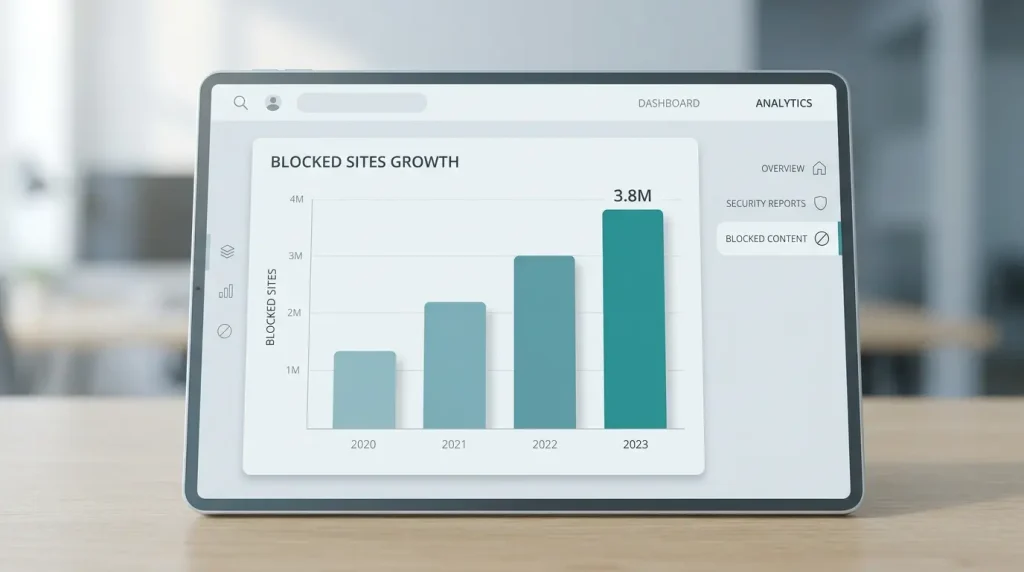
Blocking is only part of the picture. Around 220 illegal services voluntarily left the Australian market following the tightening of the rules from 2017 – operators that, rather than face enforcement, chose to withdraw. Together, the blocked sites and the voluntary departures show two sides of the same pressure: some operators are forced out, others leave under their own steam, and the net effect is a steadily shrinking space for unlawful offshore gambling aimed at Australians. The reason this matters to you as a player is that the sheer scale means a block is a normal, expected outcome of using an offshore operator, not a freak occurrence. If you play with offshore casinos, encountering a blocked site is less a question of if than when, and treating it as routine rather than alarming is the right mindset. The deeper legal reasoning behind why these operators are unlawful in the first place is covered in our guide to whether PayID casinos are legal in Australia.
What a block means for you and your funds
This is the question that actually keeps players up at night: if a site is blocked, what happens to my money and my account? The answer is part reassuring and part cautionary, and you deserve both halves plainly.
First, the reassuring part. The block is not aimed at you. There is no penalty applied to a player for having used a site that was subsequently blocked, and the block itself does not freeze, seize, or report your personal funds. The regulator’s action is against the operator’s access to the market, not against the individuals who happened to use it. So the immediate fear – that a block means you are in trouble – is misplaced.

Now the cautionary part, which is the one I want you to take seriously. A block can make it much harder to reach the operator to retrieve any balance or pending withdrawal you had with them. If you can no longer easily access the site, you may struggle to log in, request a payout, or contact support – and an offshore operator under enforcement pressure is not a reliable counterparty for recovering funds. This is precisely why I urge players never to leave significant balances sitting with any offshore operator: withdraw winnings promptly rather than letting them accumulate on a site you do not control. A block does not take your money, but it can strand it, and stranded money with an unreachable offshore operator is very difficult to recover. The practical lesson is simple and worth internalising before it ever applies to you: treat any offshore casino balance as money in transit, not money in storage, and get it back to your own account while you still easily can.
Frequently Asked Questions
Can I get in trouble if my casino is blocked?
No. The block is aimed at the operator's access to the market, not at players, and there is no penalty applied to someone for having used a site that is later blocked. The regulator's action targets the unlawful service rather than the individuals who used it.
Where does my money go if a site is blocked?
The block itself does not seize or freeze your funds, but it can make the operator much harder to reach, which can strand a balance or a pending withdrawal you had with them. This is why it is wise to withdraw winnings promptly rather than leaving money sitting with an offshore operator you do not control.
Can a blocked site reappear?
Operators sometimes resurface under a new web address to evade a block, but doing so does not make them lawful and they remain subject to further enforcement. A site reappearing under a different name is a warning sign rather than a reassurance, since it indicates an operator actively working around regulation.
Guides
Which Australian Banks Support PayID
Which banks let you use PayID The short answer to "does my bank support PayID" is almost certainly yes, and I can say that with confidence because the system was…
How PayID Deposit Bonuses Are Structured
How PayID deposit bonuses are structured A matched deposit bonus is the…
Keeping PayID Play Under Control
Keeping PayID play under control There is one feature of PayID that…
Protecting Yourself From PayID Scams
Protecting yourself from PayID scams Here is the single most useful thing…
What PayID Actually Costs You at a Casino
What PayID actually costs you The good news is short and worth…