
Protecting Yourself From PayID Scams
 Available in US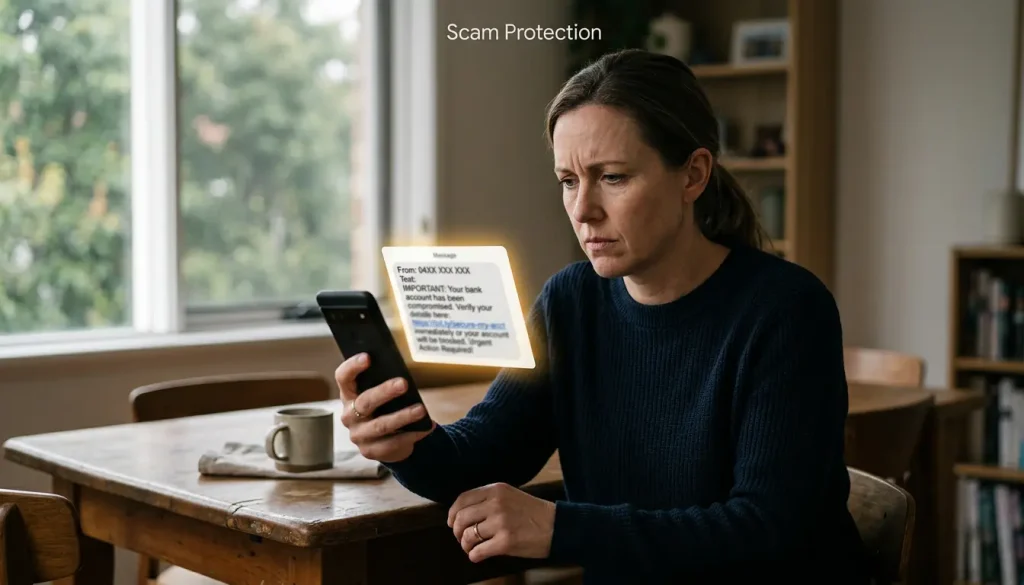
Protecting yourself from PayID scams
Here is the single most useful thing I can tell you about PayID scams: almost none of them involve hacking the payment system. The rail is not the weak point. You are. That is not an insult – it is the entire mechanism of how these scams work, and understanding it changes how you defend against them.
Table of Contents
A PayID scam is, overwhelmingly, social engineering. Someone manipulates you into either sending money to them or revealing a code that lets them act, by impersonating a buyer, a bank, a support agent, or PayID itself. They do not break the encryption or trick the bank’s servers; they trick a human into pressing the buttons. Which means your defence is behavioural, not technical – it is about what you do when an unexpected message arrives, not about any security setting you can toggle on.
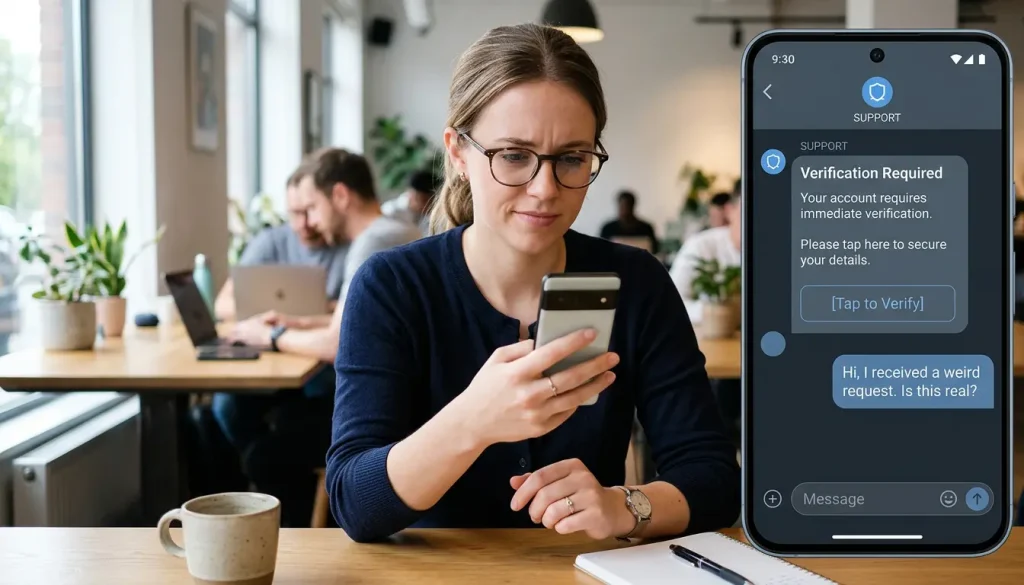
This matters because the human angle is where the losses concentrate. In February 2023, Scamwatch reported Australians had lost A$260,000 to PayID impersonation scams over the prior year – a figure built entirely on people being persuaded, not systems being breached. This piece breaks down exactly how these scams operate, where casino players in particular get targeted, and the concrete defensive habits that make you a hard target. None of it is complicated. All of it is about pausing before you act on a message you did not expect.
How PayID impersonation scams operate
The classic PayID scam has a script, and once you have seen the script you cannot unsee it – which is the best protection there is. It usually starts with a transaction you initiated, like selling something online, and then pivots into a fake problem.
The most common version goes like this. You list an item for sale. A “buyer” offers to pay via PayID and then claims there is an issue – perhaps that your account is “not set up to receive business payments,” or that they accidentally sent too much and you need to “upgrade” your PayID or refund the difference. You receive what looks like an official message, sometimes appearing to come from PayID or your bank, asking you to take an action to resolve it: pay a fee, send money back, or confirm a code. There was never any real payment. The entire scenario is fabricated to make you send money or hand over access.
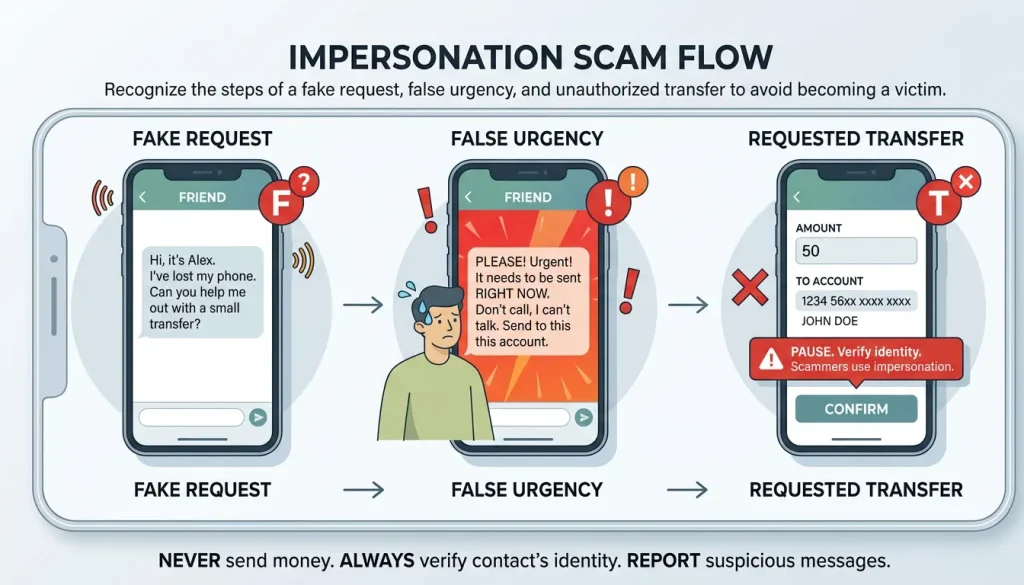
The crucial fact that disarms this whole category: PayID never charges fees to receive money, and there is no such thing as a PayID “upgrade” you pay for to accept a payment. Receiving money through PayID is free and requires nothing from you beyond having a registered alias. So any message claiming you must pay to receive, upgrade your account to get paid, or send funds back to “release” a payment is, without exception, a scam. The amounts involved across the broader category are not trivial – buying and selling scams, where PayID frequently features, accounted for more than A$15.8 million in losses across part of 2024 alone. The scammers are not clever hackers; they are persistent storytellers, and the story always asks you to do something with money you did not plan to do.
Where casino players get targeted
Casino players carry a specific vulnerability that scammers exploit, and it is worth naming plainly: when you are dealing with offshore operators, you are already accustomed to non-standard payment requests and informal support channels, which lowers your guard exactly where it should be highest.
The targeting takes a few recognisable forms. A fake “support agent” contacts you claiming there is a problem with your withdrawal that requires a verification payment or a code – playing on your anxiety about getting your winnings out. A bogus message claims your account needs a PayID re-verification to release funds, mimicking the genuine KYC step closely enough to seem plausible. Or a scammer poses as the casino itself, reaching out through a channel you did not initiate, to “help” with a deposit that supposedly failed.

What ties these together is that they all arrive unexpectedly and all ask you to act with money or codes. A legitimate operator’s verification happens inside your account, through the official cashier and support channels you logged into yourself – it does not arrive as a surprise text demanding a payment to unlock your own winnings. The asymmetry to remember is that real processes pull you toward the official channel you already trust, while scams push an external channel at you. Casino players get caught because the genuine friction of offshore play – the verification, the occasional held payout – gives scammers a believable cover story. The defence is to treat any unsolicited contact about your account as suspect by default, and to verify it only by logging in through the route you normally use, never through a link or number someone sent you.
Your anti-scam defence checklist
I distil scam defence down to a handful of non-negotiable rules, because in the moment a scam unfolds, rules are easier to follow than judgement. The whole point is to have decided your responses before the pressure arrives.
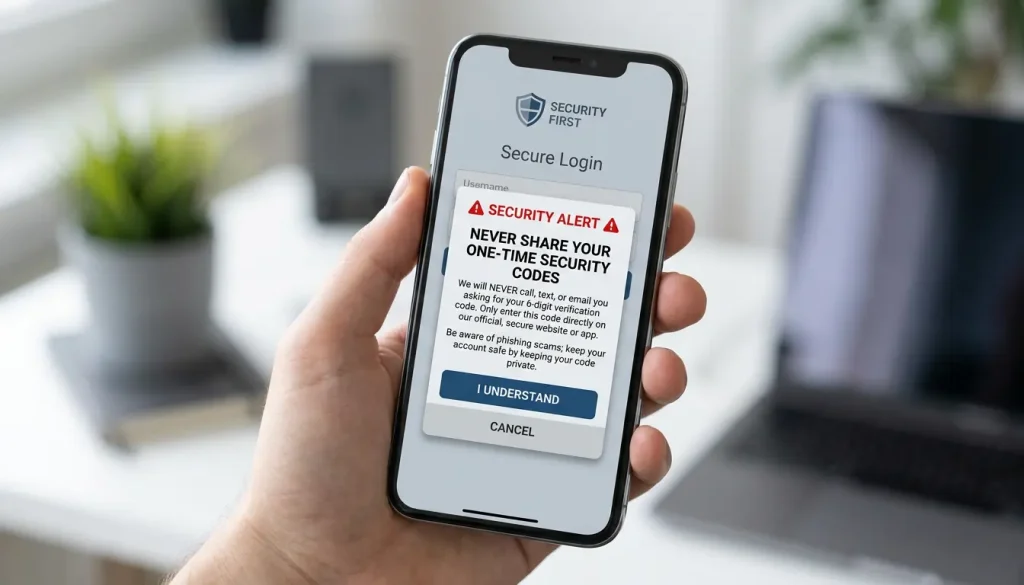
First and most important: you never pay to receive money, and PayID has no fees or upgrades for getting paid – any message saying otherwise is a scam, full stop. Second: never share a one-time code, banking password, or login detail with anyone, including someone claiming to be your bank or PayID support; legitimate staff never ask for these. Third: treat every unsolicited message, call or text about your account as suspect, and verify only by logging in yourself through the official app or site, never via a link or number provided in the message. Fourth: before sending money, read the name check your bank shows you and stop if it does not match who you expect to pay.
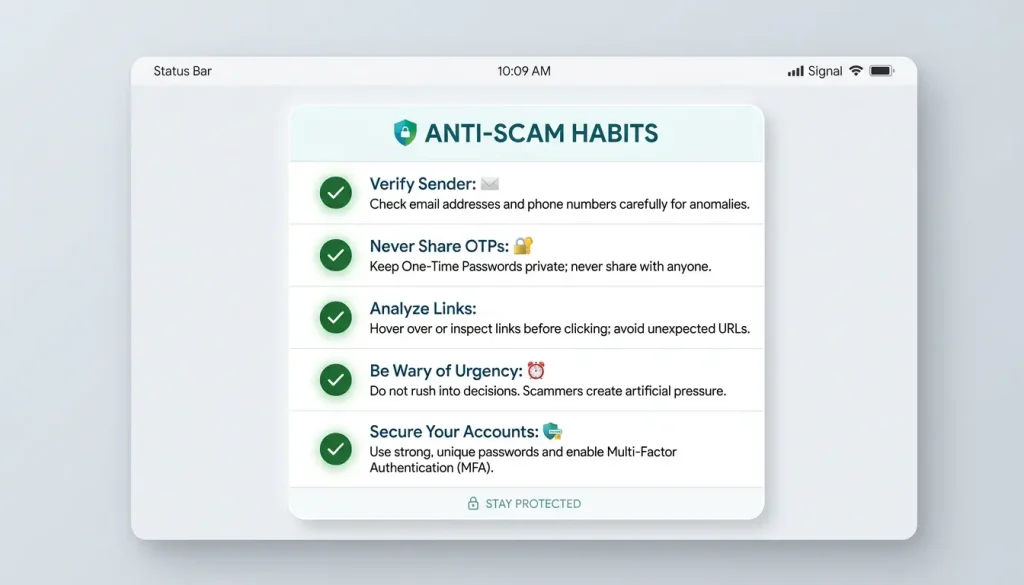
That name check is your built-in safety net, and it works because of a system worth understanding in its own right – the same name-verification layer covered in our guide to Confirmation of Payee in Australia. If you do get caught despite all this, act fast: contact your bank immediately to try to halt or recall the payment, change any compromised credentials, and report it to the national scam reporting service so it can be tracked. Speed matters because a transfer that is still in motion can sometimes be stopped, while one that has settled is far harder to recover. The recurring theme across every rule is the same: the scam needs you to act quickly and emotionally, so your defence is to act slowly and procedurally. Pause, verify through your own channel, and the story falls apart on its own.
Frequently Asked Questions
Can a scammer drain my account with my PayID alias?
No. A PayID alias only lets someone send money to you or look up the registered account name - it does not grant access to move money out of your account. Draining your account would require your login credentials or a one-time code, which is exactly why scammers try to trick you into revealing those rather than relying on the alias itself.
Are fake PayID upgrade texts real?
No, they are a scam. PayID has no paid upgrade and charges no fee to receive money, so any message claiming you must upgrade or pay to accept a payment is fraudulent. The correct response is to ignore it and verify your account only by logging in through your own banking app.
What do I do after sending money to a scammer?
Act immediately. Contact your bank to try to halt or recall the payment, since a transfer still in motion can sometimes be stopped, then change any credentials you may have exposed and report the scam to the national reporting service. The faster you move, the better the chance of limiting the loss.
Guides
Why Money Laundering Shapes Casino Rules
Why money laundering shapes casino rules Every time a casino asks where your money came from, you are bumping into a problem far larger than your account: gambling is one…
What Confirmation of Payee Does in Australia
What Confirmation of Payee does For years, sending money in Australia worked…
How Anonymous PayID Really Is at a Casino
How anonymous PayID really is I get asked whether PayID lets you…
Keeping PayID Play Under Control
Keeping PayID play under control There is one feature of PayID that…
Playing Real-Money Pokies With PayID
Playing pokies with PayID Pokies are the reason most Australians end up…